
Highland Stables
- Thread starter Zachary
- Start date
You are using an out of date browser. It may not display this or other websites correctly.
You should upgrade or use an alternative browser.
You should upgrade or use an alternative browser.
Register or Login to Hide This Ad for Free!

And... they declared Lennox and Nessie the winners. 
Last edited:


I know they polled on Instagram and Facebook as well, and these names were in the lead for a little on FB.
Also:

Also:

Haha yes! Instagram this was the winner when monitoring it. I am guessing they added both votes together. Sigh…..

BGW released the first of what should be a series of behind the seeds videos today and it features what morning prep for the Clydesdales and highland stables looks like.
Direct Link to Embedded Media Source
Direct Link to Embedded Media Source

Only then, will we truly be living with the land.behind the seeds

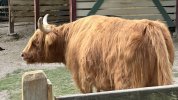
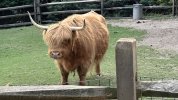
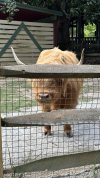
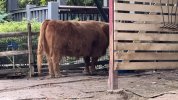
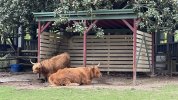
An extension of highland stables…what do you call a cow with two legs? Lean beef!
I thought it might have been stuck, but it was just cool in’ off in a mud pit. The other cow had its front legs in a blue pale of water. Hey, whatever works.

I thought it might have been stuck, but it was just cool in’ off in a mud pit. The other cow had its front legs in a blue pale of water. Hey, whatever works.
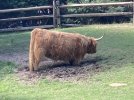


I hate it when they are obviously suffering in the heat.
As I'm not an expert on bovine living conditions, what other ways could the park ensure they stay relatively cool in this heat? And even if they offer other options, would the cows go for it?
To begin with, I’m not sure it was ethical to bring Highland Cattle to Southeastern Virginia. Regardless, they need lots of water and shade, if they have to be outside in the height of the summer. I think their current shelter is totally inadequate.
As I'm not an expert on bovine living conditions, what other ways could the park ensure they stay relatively cool in this heat? And even if they offer other options, would the cows go for it?
Possibly adding overhead fans to that shade structure but cows tend be less willing to just hang out under there then horses and there is also a moderate fire risk.
To begin with, I’m not sure it was ethical to bring Highland Cattle to Southeastern Virginia. Regardless, they need lots of water and shade, if they have to be outside in the height of the summer. I think their current shelter is totally inadequate.
Just for reference they actually were purchased from a fairly local breeder and have lived their whole lives in Southern Virginia.
I always get so on the fence about things like this.
First off we know that this summer has been record highs not just in America but almost across the world. Scotland spent more time above its average high this summer than ever. So with some of that I say it’s not like it would be better that way.
Part of me often things of something like @horsesboy said of they were born locally and raised here. To them this is what they know. There’s plenty of information out there that when you put animals like that into their natural habitat they often perish really fast because they just don’t know what to do.
But on the flip side I understand where concerns like @Nicole have for them. It has been abnormally outside even what they may be used to.
The reason I don’t get into conversations like this often is I often get myself in trouble by asking this - are all zoos unethical then? Should we sent all animals that are in captivity back to their natural habitats? What happens to animals that if it weren’t for conservation efforts of zoos (who are taking them out of their natural habitat btw) that they would be extinct generations ago?
Personally I think there’s a significant difference in bread in captivity, rehabilitation, and captured.
First off we know that this summer has been record highs not just in America but almost across the world. Scotland spent more time above its average high this summer than ever. So with some of that I say it’s not like it would be better that way.
Part of me often things of something like @horsesboy said of they were born locally and raised here. To them this is what they know. There’s plenty of information out there that when you put animals like that into their natural habitat they often perish really fast because they just don’t know what to do.
But on the flip side I understand where concerns like @Nicole have for them. It has been abnormally outside even what they may be used to.
The reason I don’t get into conversations like this often is I often get myself in trouble by asking this - are all zoos unethical then? Should we sent all animals that are in captivity back to their natural habitats? What happens to animals that if it weren’t for conservation efforts of zoos (who are taking them out of their natural habitat btw) that they would be extinct generations ago?
Personally I think there’s a significant difference in bread in captivity, rehabilitation, and captured.
Typically my gauge is if there is at least an attempt to emulate the environment where the species came from and is adapted to. The "this is the only climate they know" argument is super situational, just because you birthed some penguins in Florida doesn't mean you can just keep them in a hot and dry enclosure. Highland cattle, rather obviously, are designed for a colder climate, and would definitely have a harder time with high temps than animals with a significantly thinner coat.
Regardless of if they have only known the southern VA climate, leaving them out in the hot sun to me seems like a bad call. Hell, leaving humans out all day in the hot sun is a bad call, this is like if I was outside all day with like 3 parkas on. I know they have some tree cover and that tiny hut, but I still can't imagine how brutal it must be.
Regardless of if they have only known the southern VA climate, leaving them out in the hot sun to me seems like a bad call. Hell, leaving humans out all day in the hot sun is a bad call, this is like if I was outside all day with like 3 parkas on. I know they have some tree cover and that tiny hut, but I still can't imagine how brutal it must be.
I guess that gets into the differences between a protected reserve vs zoo - for what little I know, the protected reserve is closest to natural habitat minus humans messing it up (at least in the obvious way); I'd think this is what the park's animals should have if at all possible.
This argument though leaves out a lot of other concerns. Emulating environments can be quite cost prohibitive in some cases, and sometimes putting animals back in their own natural habitats can be more detrimental than helpful.Typically my gauge is if there is at least an attempt to emulate the environment where the species came from and is adapted to. The "this is the only climate they know" argument is super situational, just because you birthed some penguins in Florida doesn't mean you can just keep them in a hot and dry enclosure. Highland cattle, rather obviously, are designed for a colder climate, and would definitely have a harder time with high temps than animals with a significantly thinner coat.
Regardless of if they have only known the southern VA climate, leaving them out in the hot sun to me seems like a bad call. Hell, leaving humans out all day in the hot sun is a bad call, this is like if I was outside all day with like 3 parkas on. I know they have some tree cover and that tiny hut, but I still can't imagine how brutal it must be.
Those cattle aren’t adapted to traveling long ways to graze for their food. So integrating them into herds would be tough, along with the fact that they do form pacts and are territorial to outsiders.
Some other interesting tidbits to Hughland Cattle from the Highland Cattle Association of America:
Due to the double hair coat, this breed does not need a heavy layer of backfat for insulation. This allows the animal to marble naturally on low input forage while producing lean, low fat, high quality cuts of beef.
Highlands shed out earlier in the spring and produce less hair in a warmer climate, making them suitable for a variety of environments.
Additionally from their website majority of the cattle in the Midwest are highland cattle and or crossbread with them due to their heartiness.
American Highland Cattle Association
Interestingly deeper in that it also says they were most often brought inside during the harsher winter months.
Here’s another article by a ranch stating that highland cattle actually handle heat better than most other cattle:

Reducing Heat Stress in Cattle
Heat stress in our animals is always a top concern for me. I was especially concerned when we first bought our Highland cattle. All cattle are affected by heat stress, and after learning more about the breed I would venture to say that Highlands may tolerate it better than other breeds. Read...
 riebelfarms.com
Interestingly they even do well in the heat of Australia:This is good news for Highland owners, because Highlands have a hair coat. The coat thickens in the winter to keep them warm (meaning less fat storage than other breeds to keep them warm) and it SHEDS in the summer to help keep them cool. A good brush does wonders for Highlands in the spring and summer. You will be amazed at how much hair you can remove.
20 Frequently Asked Questions about Highland Cattle
A list of the common questions about Highland Cattle, covering many topics along with links to further information.
www.cruachan.com.au
And to help them stay cool the best thing is lots of water, pass grazing, and a shade spot they can go to:
Keep Cattle Cool with These Simple Heat-beating Strategies
The months of July and August are traditionally the hottest time of the year in the northern hemisphere. During these critical warmer periods, it's important producers take action to keep cattle cool and comfortable and mitigate the potential animal performance losses typically seen when...
am.gallagher.com
But from all that stuff the best I can see is standard cattle have issues at 100+ F and 50+% humidity. I’m not sure how much more a highland cattle can handle but they say it can take more.
I am not even diving into the technicality of it. Though I agree it is useful to be informed and understand these sort of things before one objects, unfortunately a lot of people don't work that way.
At the end of the day having animals is a twofold responsibility, you must A; actually take good care of the animals and do things right but also B; LOOK like you are taking good care of the animals and doing things right. Most of the time those two go hand in hand, but this is a good example of optically, it looks terrible to have these fuzzy cows in a small enclosure in the burning heat to where one of them tries to bury itself. Even if that is a totally fine and proven compatible habitat for them, it looks bad. People think this is bad for the cows, and it is a reasonable first response.
At the end of the day having animals is a twofold responsibility, you must A; actually take good care of the animals and do things right but also B; LOOK like you are taking good care of the animals and doing things right. Most of the time those two go hand in hand, but this is a good example of optically, it looks terrible to have these fuzzy cows in a small enclosure in the burning heat to where one of them tries to bury itself. Even if that is a totally fine and proven compatible habitat for them, it looks bad. People think this is bad for the cows, and it is a reasonable first response.
Share:
Consider Donating to Hide This Ad