Register or Login to Hide This Ad for Free!
I am not even diving into the technicality of it. Though I agree it is useful to be informed and understand these sort of things before one objects, unfortunately a lot of people don't work that way.

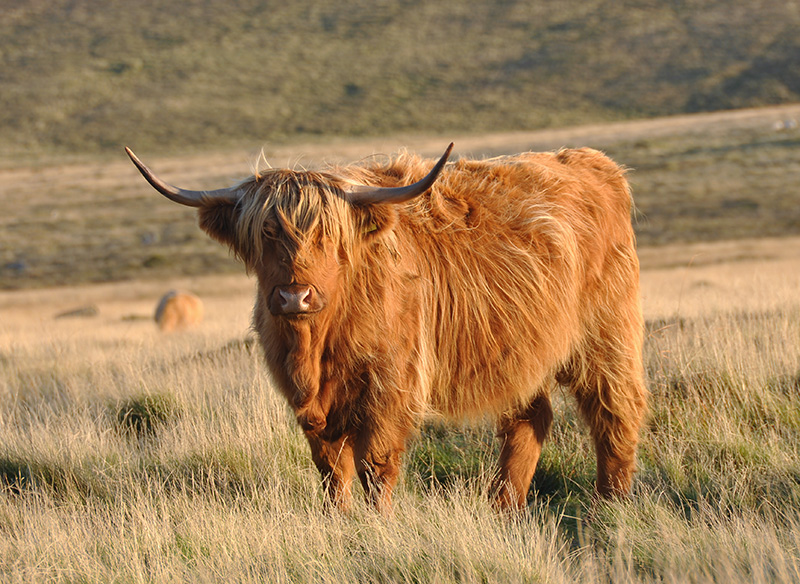
At the end of the day having animals is a twofold responsibility, you must A; actually take good care of the animals and do things right but also B; LOOK like you are taking good care of the animals and doing things right. Most of the time those two go hand in hand, but this is a good example of optically, it looks terrible to have these fuzzy cows in a small enclosure in the burning heat to where one of them tries to bury itself. Even if that is a totally fine and proven compatible habitat for them, it looks bad. People think this is bad for the cows, and it is a reasonable first response.
Disagree on B. A is the only thing that matters. Take care of them and do things right. As far as optics, they can educate. If someone choses to not ask, I do not put that on the responsibility of the park.

And I would add, putting out items for them to stand in and creating a mud pit for them to put hooves into is doing something to take care of them. Part of your part B is "have these fuzzy cows in a small enclosure" - when my research shows that's what's best, so you want the optics of bigger field, which is actually bad for their health in this situation?

I used to get backlash often for the way I care for my dog as a matter of fact. She doesn't go outside much in the summer, and wears a coat in the winter. But she's a beagle mix. She doesn't handle heat really well because she has oily wiry hair that traps heat vary easily, but in the winter her bare spots on her stomach cause too much heat to escape. Additionally she is partially blind in one eye because she can't produce tears in it, so gunk gets in it very easily, and you would assume I'm a bad owner because she always has red puffy eyes from us cleaning it. The optics of caring for her look like I don't "let her be a dog" but I can assure you she's extremely well cared for and other than her eye, her vet states that for her age (10 years old) she's in a great place health wise.

In the end, I understand optics matter, especially in the matter of SEAS history. But there's quite a few animals out there where the optics of what you do for them looks bad, but is actually what you would be seeing them do in nature. Take your penguin example earlier - there's varieties like the Galapagos Penguin and Southern Rock Hopper Penguin who actually thrive in temperatures of 90+ degrees and putting them in freezing temperatures would be bad, but based on doing "optics" you would put them in a situation that's too cold. I rather them take care of the animals properly than worry about optics of what someone thinks should be happening.
 
I rather them take care of the animals properly than worry about optics of what someone thinks should be happening.
That is why I put A before B, as in A is more important than B, but you can't ignore B. You cited specific examples of your own and even agreed optics matters, it isn't hard to optically improve this situation and avoid conversations like these altogether. Your penguin example, put an educational sign up at the exhibit that tells people that so they don't think "oh wow", though that one is so drastic it is almost obvious those animals need a specific habitat.

Disagree on B. A is the only thing that matters. Take care of them and do things right. As far as optics, they can educate. If someone choses to not ask, I do not put that on the responsibility of the park.
Unfortunately it isn't a responsibility thing or however you can logically put it. I completely agree with you that B shouldn't matter, but it does. Especially to a huge business with a massive animal-treatment scandal constantly looming over them, it really matters. Something as simple as a sign that goes into how these animals thrive in hotter temps or just a small attempt in making the exhibit shadier would go a long way. Think of it as a gateway controversy, someone starts getting concerned about that one cow, starts plugging around online, takes all of 5 seconds to end up reading about Blackfish. SEAS should want to bury any concerns of animal treatment. The fact that this conversation is happening on this forum (where, generally, the members have above-average intelligence) is proof that at least a small group of people are concerned about that cow whether or not it is warranted or technically correct.
 
Signs are easily ignored. And I only lightly agree optics matter. Putting them in a smaller field, with some water and some shade is proper care.

Maybe the caregiver doing a speech every 30th minutes is what’s needed.

Specifically the issue at hand is that the optics of what could make this better - isn’t necessarily what’s best. The complaints seem to be they had to step in mud/water, that it’s a small pen they are kept to, and not much shade. The shade thing is the only one that somewhat applies to what’s best and what’s optically best. But on the flip side if you do some big shade awning over a majority of the area that the grass dies and that hillside becomes a mud pit and now the animals can physically get hurt from being stuck, not to mention illnesses from standing water issues.

And honestly my biggest issue is that suggestion @Nicole made that what’s best is to send them back to their natural habitat. Along with the statement of “not getting into the technicality of it” is a part of the problem to me.

I’m very sensitive to this optics topic because someone tried to have my dog taken away from me due to the “optics” of how I was caring for my dog. She was taken away for a week because she “wasn’t outside much and looked too thin for a well fed dog”. So this is why you will likely never see me agree with doing something to optically make people feel better in terms of care.
 
@warfelg: Right at the top of one of the pages you linked:

When the temperature heat index (THI) is 72 degrees Fahrenheit or higher your cattle are beginning to really feel the effects of the heat.

At that point, that article recommends 20 to 40 square feet of shaded, ventilated structure per animal and even sprinkler systems to provide a way for them to cool their bodies.

Sunday's heat index in Williamsburg was 97 degrees.

It seems well within reason for people to be concerned given the available data and the conditions we see in the park.
 
  • Like
Reactions: Nicole and Mwe BGW
@Zachary - I’m not implying people shouldn’t be concerned for well-being. (FWIW the reason I left that out is it didn’t specify what breed of cattle it pertained to since they all say Highland can handle a wider range) Rather the early implication that they shouldn’t be in Virginia to begin with is upsetting to me.

Best way to sum up my feelings:
There's a difference between the inaction of someone having sat there and watched most the day to see nothing was done for the cattle, and concern off a picture where we don't know what happened throughout the day.
 
Last edited:
  • Like
Reactions: Mwe BGW
I want to go back to the implication that because they were raised in Southeastern Virginia, they should be acclimated. The breed is adapted to the Scottish Highlands. Living in a different climate for a few generations isn’t likely change that.

Just for reference, here are the average temperatures in Scotland:

You can expect average maximum temperatures to range from approximately 7-13°C (or 45°-55°F) during the months of March, April and May.

June, July and August are normally the warmest months in Scotland, with average maximum temperatures ranging from approximately 15-17°C (or 59-63 °F).

In the autumn (or fall), Scotland is likely to experience temperatures ranging from around 8-15°C (46-59°F) from September to November.

December, January and February are generally the coldest months in Scotland, with the average maximum temperature usually around 5°C (41°F).

 
  • Like
Reactions: Mwe BGW
Through farmers selective breeding to pick cattle with fur qualities that work better in this climate I would expect there could be changes in a few generations.

Highlands require little in the way of shelter, feed supplements, or expensive grains to achieve and maintain good condition and fitness. In fact, Highland cattle seem to enjoy conditions in which many other breeds would perish. Cold weather and snow have little effect on them. They have been raised as far north as Alaska and the Scandinavian countries. They also adapt well to the more southerly climates with successful herds as far south as Texas and Georgia. Less than ideal pasture or range land is another reason to consider the Highland breed. It has been said that the Highland will eat what other cattle pass by and get fat on it! The Highland is also an excellent browser, able to clear a brush lot with speed and efficiency.
 
  • Like
Reactions: Mwe BGW
Thistle’s Birthday!

To view this content we will need your consent to set third party cookies.
For more detailed information, see our cookies page.

Direct Link to Embedded Media Source

If the forum doesn’t already have a birthday tracker, “announcement thing,” for animals, key staff, rides, parks, etc., it should!
Maybe a banner on the front page?

Moved suggestion on Feature Request.

Happy birthday, Thistle!
 
Last edited:
I would like to issue the following PSA horses do and should lay down from time to time. This is healthy and even a good mental sign as they will only do so if they feel safe and relaxed. There is no need to go frantically running to the zoo staff to report that one is laying down.
 
Last edited:
At the Fall Member Appreciation Town Hall, Kevin cautiously announced that two new Clydesdales will be at the park in a few weeks. Although they should be viewable from the train, he doesn't expect them to be at the stables before the end of Christmas Town.

To view this content we will need your consent to set third party cookies.
For more detailed information, see our cookies page.

Direct Link to Embedded Media Source
 
At the Fall Member Appreciation Town Hall, Kevin cautiously announced that two new Clydesdales will be at the park in a few weeks. Although they should be viewable from the train, he doesn't expect them to be at the stables before the end of Christmas Town.

To view this content we will need your consent to set third party cookies.
For more detailed information, see our cookies page.

Direct Link to Embedded Media Source

30 day quarantine are fairly standard in the horse world to protect against disease spread. This was the process that they have used historicaly at the park.
 
30 day quarantine are fairly standard in the horse world to protect against disease spread. This was the process that they have used historicaly at the park.

This is standard AZA procedure when they transfer animals between zoos. They also require veterinary supervision and testing during this period as well. The veterinarians can also modify and extend the quarantine time if need be.
 
Meet Henry & Fergus! BGW’s two newly adopted Clydesdales! Henry is almost 2 years old and Fergus is 7 months old. To tell them apart, now, Henry has a longer more grown in mane and Fergus being younger has a much shorter, not as grown out mane.

To view this content we will need your consent to set third party cookies.
For more detailed information, see our cookies page.

Direct Link to Embedded Media Source
 
Last edited:
Meet Henry & Fergus! BGW’s two newly adopted Clydesdales! Henry is almost 2 years old and Fergus is 7 months old. To tell them apart, now, Henry has a longer more grown in mane and Fergus being younger has a music shorter, not as grown out mane.

To view this content we will need your consent to set third party cookies.
For more detailed information, see our cookies page.

Direct Link to Embedded Media Source

I love their dedication to keeping these beautiful horses
 
Consider Donating to Hide This Ad