
Bridge Replacement Between Heatherdowns & Rhinefeld
- Thread starter Adam
- Start date
You are using an out of date browser. It may not display this or other websites correctly.
You should upgrade or use an alternative browser.
You should upgrade or use an alternative browser.
Register or Login to Hide This Ad for Free!


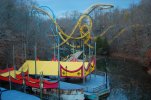
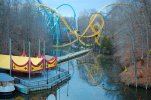


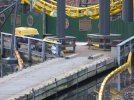
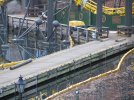


Celticdog, those really are beautiful pictures!!
Thanks for covering the bridge too Alf33!!
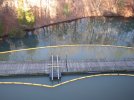
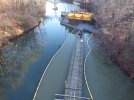
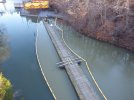
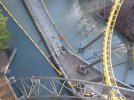
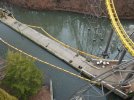
Now, for an eye in the sky...
Thanks for covering the bridge too Alf33!!
Now, for an eye in the sky...
Attachments

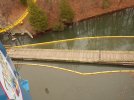
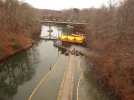
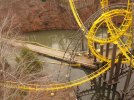

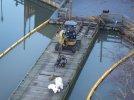
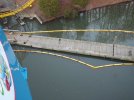
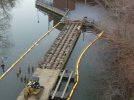
chickenking said:Is that piece of equipment a new ride?
It's the old excavators from Land of the Dragons!!

Seriously, though, these pictures are awesome!
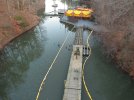
So, they can park construction equipment on the bridge, but it can't hold "larger guests?" Something is fishy here...

That's a very small track hoe on the end of the bridge. Nothing fishy really, on average they weigh less than 8,000 lbs.
http://www.ebay.com/itm/2006-Caterpillar-303C-CR-Mini-Excavator-Thumb-/221317174094?pt=Excavators&hash=item338788134e
Much less weight than the bridge full of guests.... HTH
Eric M
http://www.ebay.com/itm/2006-Caterpillar-303C-CR-Mini-Excavator-Thumb-/221317174094?pt=Excavators&hash=item338788134e
Much less weight than the bridge full of guests.... HTH
Eric M
Yamifj1200 said:That's a very small track hoe on the end of the bridge. Nothing fishy really, on average they weigh less than 8,000 lbs.
http://www.ebay.com/itm/2006-Caterpillar-303C-CR-Mini-Excavator-Thumb-/221317174094?pt=Excavators&hash=item338788134e
Much less weight than the bridge full of guests.... HTH
Eric M
8,000 pounds focus on one area vs load distributed are two vastly different things.

It also comes down to capacity and how many people are safely allowed in one space- much like having capacity at the Globe Theater or The Festhaus.
Neither one will collapse at the weight- but in case of an emergency- people need to flee without being trampled on.
Neither one will collapse at the weight- but in case of an emergency- people need to flee without being trampled on.

They are also destroying the bridge so why would the park care what weight is on it now?

James said:They are also destroying the bridge so why would the park care what weight is on it now?
Well they could have a backhoe to dredge out of the Rhine. Looking at the pictures though it seems that the bridge is perfectly fine with a supposedly 4-ton vehicle on it.
In theater when we use a flying system. The max weight we put on it is usually only 25% of what it can actually hold. We do this in case the system gets a shock load ( a sudden jerk) and to allow room for error in weight. My guess is the same rules apply for the bridge when it was in operation. So yes I'm sure it can hold that back hoe with ease but the park would never want to push it to that level of strain when people were on it.
James said:In theater when we use a flying system. The max weight we put on it is usually only 25% of what it can actually hold. We do this in case the system gets a shock load ( a sudden jerk) and to allow room for error in weight. My guess is the same rules apply for the bridge when it was in operation. So yes I'm sure it can hold that back hoe with ease but the park would never want to push it to that level of strain when people were on it.
After bolt we know that the park doesn't look at safety ratings. My point is the bridge hard look cockeyed with four tons resting on it. It appears to not have an anchor to the backhoe/frontloaded/wideload/idgaf what its technically called. In that scenario they must be VERY comfortable with what the bridge is capable of. The 25% rule should also still be in effect via OSHA with a crewman working with heavy machinery on it.
I wonder if there is enough data in the plans for me to calculate the buoyancy of the current bridge.

This is called the safety factor (SF), and it is a standard part of any static or moving structural design. It provides not only for shock loading, but also for possible material defects, construction errors, lazy setup/usage, inaccurate design assumptions, the effects of age, and other real-world aspects that can't be perfectly designed for.James said:In theater when we use a flying system. The max weight we put on it is usually only 25% of what it can actually hold. We do this in case the system gets a shock load ( a sudden jerk) and to allow room for error in weight. My guess is the same rules apply for the bridge when it was in operation. So yes I'm sure it can hold that back hoe with ease but the park would never want to push it to that level of strain when people were on it.
The SF multiplier varies according to considerations like the system being engineered, its environment, its intended usage, the target service life, the subsystem being calculated (different SFs for different subsystems), and the degree of danger/risk/impact were the (sub)system to fail. A flying system may get an SF of 4, but an aircraft that actually flies probably would be spec'ed at an SF of 1.5 due to weight and cost considerations. This brings a corresponding increase in the amount of effort needed to design, fabricate, operate, and maintain an aircraft. You don't get anywhere near the same amount of wiggle room for sloppiness.
I have no idea what the SF was for the Rhine Bridge, nor for how closely a given piece of construction equipment would approach that max design load. It probably wouldn't be too hard to very roughly back it out, given some general info about floating bridge design and the pics posted on this site. Anyone up for doing that? I am feeling extremely lazy tonight.

Share:
Consider Donating to Hide This Ad