

For the record, the new S&S Axis concept video, assuming it presents an accurate depiction of the planned coaster's supports, basically voids any chance BGW's 2025 coaster plans are for an Axis. The lift structure and foundations on the Axis concept are very, very different than what the BGW plans show. Note the large lift motor pad in the concept video centered directly below the bottom of the lift, the single column support with a footer directly below the spine, and the inverse-V support structures up the rest of the lift centered around the track. This is all massively out of line with the foundations we have for BGW's next coaster.
Project 2025/Holzfäller: Big Bad Wolf 2 (B&M Family Invert)
- Thread starter Zachary
- Start date
You are using an out of date browser. It may not display this or other websites correctly.
You should upgrade or use an alternative browser.
You should upgrade or use an alternative browser.
Register or Login to Hide This Ad for Free!
- Status
- Not open for further replies.


So true! Verbolten's floating footers are just so sexy, I'd be remiss if they didn't try something as bold and daring on this coaster as well.

The rumor I've always heard is that B&M flyers are extraordinarily expensive due to their very heavy and complex trains.
Four days and two pages of discussion late to the party the weight and complexity of the trains barely touch the tip of the iceberg with the B&M Flyer trains.
A single car on one of the trains weighs as much as an entire train for Magnum XL-200. In high stress areas of the track the spine can get as thick as 4.5 feet due to the weight and the forces the train is pushing on the track. To top it off, the weight of the trains makes it incredibly stressful on any moving parts for the ride such as the lift motor, brakes, and drive tires.
Complexity wise, each train has locking mechanisms inside the harness that attach to the arm rests. Due to the already huge weight there's a buss bar that provides power to the train so that batteries aren't needed to lock and unlock the restraints. Not to mention there's the swing arms and the chassis mechanism that permits the train to swing and lock into the flying position. There's so many sensors in a single Flyer car that if one doesn't read things properly the ride will go down. Combine this with the trains communicating with the ride itself through an optic light connection, if it's not lined up quite right, if someone's too tall, hell if the sun's in the right place in the sky that day it could knock the ride out because the ride system has lost its method of communicating with the trains.
Operations wise Flyers are also a total pain in the ass to deal with in terms of guest safety. If their legs aren't secured in the leg flaps properly a rider can very easily break their leg during a ride. Evacuating riders off of a train is also a very laborious process with multiple steps involved, and requiring a hand crank for the chassis pins, a T-key for the harness pins, and a paint scraper for the redundancy pin to actually allow guests to get out of the seat in the flying position.
Costs are one factor in a lot of parks opting not to build one but the rider safety question is another one many people often don't realize.
I'm not saying it's likely, but it's not like BGW doesn't have a history of customizing support structures outside of OEM design...
They may have done it once in the 90s. I think there's debate over whether or not Alpie's lift supports were a happy accident resulting from the severely limited lift footer placement options or if they were specifically requested to imitate a ski lift. Either way though, that is distant history. Is there another, more recent example I'm missing?
Also, we're talking about the BGW that, reportedly, greenlit Intamin's first draft of Pantheon's layout with no notes. I think we all might be surprised to learn just how hands-off with proposed coaster designs BGW D&E actually is.

DF and Alpie were what I was thinking of - the first part of what I wrote the key, it's not likelyThey may have done it once in the 90s. I think there's debate over whether or not Alpie's lift supports were a happy accident resulting from the severely limited lift footer placement options or if they were specifically requested to imitate a ski lift. Either way though, that is distant history. Is there another, more recent example I'm missing?
Also, we're talking about the BGW that, reportedly, greenlit Intamin's first draft of Pantheon's layout with no notes. I think we all might be surprised to learn just how hands-off with proposed coaster designs BGW D&E actually is.

ElToroRyan goes over this in his Superman Ultimate Flight Problematic Coasters video, and even more in depth what was described here. I’d highly recommend giving that a watch if you want to now just how complex the stations alone of the rides are.Four days and two pages of discussion late to the party the weight and complexity of the trains barely touch the tip of the iceberg with the B&M Flyer trains.
A single car on one of the trains weighs as much as an entire train for Magnum XL-200. In high stress areas of the track the spine can get as thick as 4.5 feet due to the weight and the forces the train is pushing on the track. To top it off, the weight of the trains makes it incredibly stressful on any moving parts for the ride such as the lift motor, brakes, and drive tires.
Complexity wise, each train has locking mechanisms inside the harness that attach to the arm rests. Due to the already huge weight there's a buss bar that provides power to the train so that batteries aren't needed to lock and unlock the restraints. Not to mention there's the swing arms and the chassis mechanism that permits the train to swing and lock into the flying position. There's so many sensors in a single Flyer car that if one doesn't read things properly the ride will go down. Combine this with the trains communicating with the ride itself through an optic light connection, if it's not lined up quite right, if someone's too tall, hell if the sun's in the right place in the sky that day it could knock the ride out because the ride system has lost its method of communicating with the trains.
Operations wise Flyers are also a total pain in the ass to deal with in terms of guest safety. If their legs aren't secured in the leg flaps properly a rider can very easily break their leg during a ride. Evacuating riders off of a train is also a very laborious process with multiple steps involved, and requiring a hand crank for the chassis pins, a T-key for the harness pins, and a paint scraper for the redundancy pin to actually allow guests to get out of the seat in the flying position.
Costs are one factor in a lot of parks opting not to build one but the rider safety question is another one many people often don't realize.
ElToroRyan goes over this in his Superman Ultimate Flight Problematic Coasters video, and even more in depth what was described here. I’d highly recommend giving that a watch if you want to now just how complex the stations alone of the rides are.
Fitting you mention that because the person who he gathered all that information from was one of my teammates.

Sooooo, I know a good number of people are upset about the coaster model they ultimately decided on for this tract of land for this particular year, and believe me I share some of that frustration due to all of the previous plans that had been floated and fell through. But for me personally I am growing accustomed to the idea of this coaster especially after the top notch renderings provided by CoasterMac ND Intim305. I'm acclimating myself to the possibilities that are still there for the FHP area. Perhaps a larger coaster nestled in back there to compliment the terrain in the not too distant future? I get jazzed about any coaster addition to BGW, not gonna lie. I think I'm currently more miffed about the fact that we have this news but have to wait till 2025 to ride! I just hope that our version is considered to be superior to Phoenix Rising when all is said and done lol. BTW, thanks BGWFans!

I would rather see a ride like this take the place of the Battle for Eire plot. Maybe have like an indoor/outdoor suspended coaster that goes into the woods behind Ireland.

would be cool tho I wonder if it'd even fit there given the space back thereI would rather see a ride like this take the place of the Battle for Eire plot. Maybe have like an indoor/outdoor suspended coaster that goes into the woods behind Ireland.
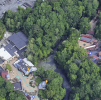

I'm sure they could expand into the parking lot if they needed to. They already did for Killarney Diner's queue
would be cool tho I wonder if it'd even fit there given the space back thereView attachment 30982
It could very easily. There's a ton of land back there.
I would rather see a ride like this take the place of the Battle for Eire plot. Maybe have like an indoor/outdoor suspended coaster that goes into the woods behind Ireland.
Picking at my brain remembering someone on here proposed a Gerstlauer Eurofighter of some sort in that plot like... 8 years ago?

The more I think about how they are focusing so much on this area and Ireland has not a single coaster to show for itself, the more I scratch my head and think about how much more sense it would make there. Theme is easy, and the land exists. But then I remember it's not about what makes sense...anymore.

Picking at my brain remembering someone on here proposed a Gerstlauer Eurofighter of some sort in that plot like... 8 years ago?
I suggested a family wood coaster back there some years ago. Lift and drop behind the sim building, then run up under the England lot's footbridge to the surprisingly large wooded plot between England lot and France lot. A few fun turns and twists in that area (there is family-level terrain back there) and then a zippy return under the footbridge to Ireland.
I think you could leave quite a few trees surrounding most of that area too, so it wouldn't turn into yet another denuded zone with too-long sightlines.
The scale is sort of perfect for that exact plot, actually. But oh well...

Y'all are all assuming they actually build this one. That's a pretty big assumption for that plot lately!
No offense but I'm extremely anti anything that diminishes the peaceful walk across the bridge or down the hill to the front. Security there is bad enough. If anything goes in between Ireland and England i hope it's compact and they preserve enough trees to hide it.I suggested a family wood coaster back there some years ago. Lift and drop behind the sim building, then run up under the England lot's footbridge to the surprisingly large wooded plot between England lot and France lot. A few fun turns and twists in that area (there is family-level terrain back there) and then a zippy return under the footbridge to Ireland.
I think you could leave quite a few trees surrounding most of that area too, so it wouldn't turn into yet another denuded zone with too-long sightlines.
The scale is sort of perfect for that exact plot, actually. But oh well...
I have thought the same location but never going out of the park between the parking lots (big bear mountain type would be amazing there ripping through the valleys). I thought a euro flyer could be compact enough to be almost completely in Ireland and around the pond. I would like to see something back at the lorikeets. Would be a cool spot for something like a family coaster set up like cedar point's corkscrew that the walking path goes under the coaster.I suggested a family wood coaster back there some years ago. Lift and drop behind the sim building, then run up under the England lot's footbridge to the surprisingly large wooded plot between England lot and France lot. A few fun turns and twists in that area (there is family-level terrain back there) and then a zippy return under the footbridge to Ireland.
I think you could leave quite a few trees surrounding most of that area too, so it wouldn't turn into yet another denuded zone with too-long sightlines.
The scale is sort of perfect for that exact plot, actually. But oh well...
- Status
- Not open for further replies.
Share:
Consider Donating to Hide This Ad