

incase anyone still wants to argue the drop height: expedition he force, drop of 10degrees off vertical, 184 feet high, 75mph.
shh shh shh shh... Let them have their fun.

incase anyone still wants to argue the drop height: expedition he force, drop of 10degrees off vertical, 184 feet high, 75mph.

incase anyone still wants to argue the drop height: expedition he force, drop of 10degrees off vertical, 184 feet high, 75mph.
Height is listed and you can clearly see from aerial photos that there aren’t an additional 20-30 feet hiding in some sort of pit under the lift. I’m on mobile so don’t want to link it, but look at the Rcdb pics.The drop height isn’t listed for GeForce
The lift is 188, the max height is 174, those are both different from the drop.Wikipedia says 188, and RCDB says 174.
Either way it's well within the 190 foot target y'all are aiming at in this discussion.
Height is listed and you can clearly see from aerial photos that there aren’t an additional 20-30 feet hiding in some sort of pit under the lift. I’m on mobile so don’t want to link it, but look at the Rcdb pics.
Also...google says 184
The lift is 188, the max height is 174, those are both different from the drop
I know you’re not trying to be rude, so I’ll try to explain that. When a coaster goes down a drop there is one thing making it go faster: gravity. There are roughly three things making it go slower: Normal force, air resistance, and friction. I will explain these to help illustrate why one drop would create such different speeds over another drop.Google is getting from literally nowhere lol. Also I can name more examples of rides reaching 75 at 200 ft than not.
And for skyrush the culprit is the 4 wide trainsActually the steepness of the drop makes sense now. Maverick starts out at like 58 mph with only a 100 foot drop (and at 95 deg).

I would consider friction comparable on trains with similar builds. Wheels are a replacable part and so are the bearings inside them.@warfelg Another seroius question from a interested observer -
You mentioned the variances between SkyRush and Apollo. Earlier in this conversation, was a mention of friction. Could not the advances in train/track design contribute to more speed in the 12 years between Apollo and SkyRush?
I'll hang up and listen.
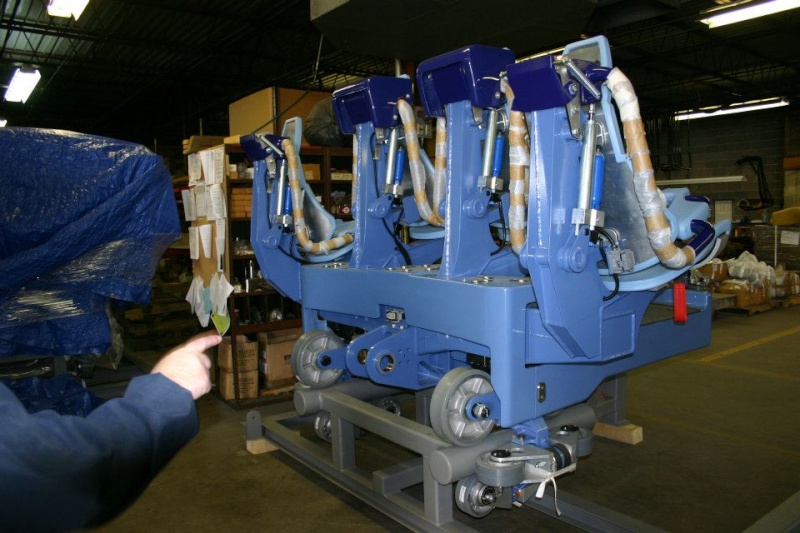
Sorry - I found this from Intamin regarding their new trains. Whether this has much bearing in speed is beyond my pay grade -
- By using the latest machinery technology the chassis weight was significantly reduced, it weighs less than its welded counterpart and the chassis tolerances are much smaller and more precise which is crucial on LSM driven trains, as this makes it easy to maintain uniform air gaps with the track-mounted stators throughout the trains.



We use essential cookies to make this site work, and optional cookies to enhance your experience.


