One of the BGW Facebook groups did a survey on whether they'd go to the park with the mask requirement and about 2/3 said yes and 1/3 said no with over 600 responses, so it's a decent size sample. However, this is a biased sample since the group is more geared towards regular visitors and passholders and not necessarily the general public, but it gives a decent idea how park enthusiasts feel about marks. 1/3 of a company's prime customers rejecting a policy outright is a lot and not something to trifle at, particularly if those customers continue to be charged for their passes.
I won't hit on this too hard since
@warfelg beat me to it. That is a poll done by people who know about the park, use Facebook, are a member of a specific group, have seen the poll, and then chose to respond. The demographics for that poll are extremely specific. I should also point out, just because they may be the most vocal does not equate to an actual larger demographic.
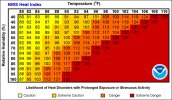
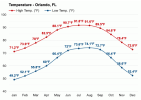
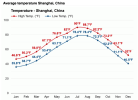
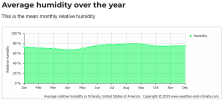
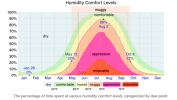
The main mask issue isn't just the heat and humidity, it's that it's all day in that heat and humidity with little to no ability to get out of the heat with a policy on paper that masks must be worn the whole time, including for small children. Unless a person is conditioned for that level of air intake, there is no way that policy can be followed by the vast majority of visitors to the parks. This is far different than wearing a mask for a half hour in a store or on the train, which is what mask wearing in those other countries also typically entails. Comparatively it's like running a mile vs running a marathon - the first most people can be trained for quickly, the other takes months of conditioning.
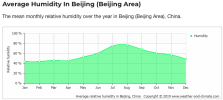
You do realize that most people wear masks in China for long periods of time because their section of the atmosphere is so incredibly polluted? They are used to wearing masks. They have no concerns wearing masks in whatever heat or humidity for all day even. They don't just wear them in a store or on a train. In fact, I believe they take them off during their time indoors. At least, they likely used to prior to this pandemic.
Also you seemed to have skipped over the fact that you are permitted to take your masks off when sitting at a table when you are eating or drinking? Does it not compute that you can just sit down at a table, take your mask off and drink a few bottles or cups of water before taking off? Your interpretation of this policy seems to be a bit skewed.
I honestly feel children would be more likely to keep a mask on than most adults. Children will likely have fun with the mask and think it is likely a fun accessory like a costume or playing dress up. And with so many fun designs, they would likely wear them very happily. I have seen children wear full Halloween costume masks in parks before.
Also, you do realize that people have been coping with heat and humidity for ages. Quite honestly, a mask is not going to be that drastic of a difference. There are plenty of shops, restaurants, restrooms, attractions, and shows that are all indoors. When you take into account the extremely low capacity levels they will start with, there should be plenty of opportunity to step inside, not to mention all the trees with shade and the wind. Oh and can't forget the Florida thunderstorms where that wind really picks up.
Mask free zones are a good idea, though that should include most outside walkways where social distancing isn't an issue. As an example, I was in Old Town Alexandria last weekend and they closed off some of the roads as pedestrian zones. When people were outside most didn't have masks on, but almost everyone put them on when they went to get food orders or into the ice cream shops. That's a rational policy that maximizes safety, without being overly intrusive, so people can comfortably be out for as much of the day as they like.
There is quite a difference between a town's road versus a parks pathway. The typical width of a main park pathway is a single lane for vehicle traffic with some varying additional width. Most parks can have one lane one way vehicle traffic along their main primary pathways. It is rare that you see pathways any larger than that. Space is a premium and parks are designed to be tight. The space just isn't available. And while I would agree that pathways do offer some more space than interior spaces, enough that may allow for social distancing, I would argue that social distancing 6 feet apart is not a guarentee especially at choke points. Further, I would argue that regardless of the ability to physically distance yourself, you are still supposed to wear a mask according to health officials.