
I think anyone who suggests having separate operators for the amusement park and waterpark at these properties really doesn't understand the industry that well. For many of the properties, it is the waterpark that is the primary draw during the summer season, and if both were to be separated the theme park side would lose a lot of visitors. There's a reason why many regional parks have the combined model these days, with standalone amusement parks generally either being large parks (i.e. those that draw from outside their area) or small properties in markets with other waterparks. Speaking of that, many of the Six Flags waterparks haven't kept pace with standalone waterparks in the area, which would make them harder to sell as a sole waterpark product.
News Enchanted Parks & EPR Acquire Seven Parks from Six Flags
- Thread starter MaxxForceFan
- Start date
You are using an out of date browser. It may not display this or other websites correctly.
You should upgrade or use an alternative browser.
You should upgrade or use an alternative browser.
Register or Login to Hide This Ad for Free!

They wouldn’t have hired a lawyer and filed the trademark application if they weren’t serious. lol.There’s currently no more new trademarks and their site is gone. So I’m guessing it’s dead now

So that’s why everyone keeps giving me the thumbs down..That's not what that means at all.
People found the clues, tons of mainstream news articles were written, and IAM/Enchanted quickly moved to erase said clues.

Not necessarily because it’s wrong, but because it’s just speculation that’s not really based on anything. That type of post isn’t worth readingSo that’s why everyone keeps giving me the thumbs down..
I see, sorry about that.Not necessarily because it’s wrong, but because it’s just speculation that’s not really based on anything. That type of post isn’t worth reading
South Whitehall Township is highly motivated to not let the park close, as they make a large part of their budget from the amusement admissions tax. There is not really anything else the land could be used for that would remotely come close to making up that budget shortfall. South Whitehall budget, page 22 (Dorney Park is the only significant payer of the admissions tax in the Township.)Re: Dorney: Frankly, I don't expect to see a trademark suggesting a Dorney sale because if/when Six Flags decides to pull the plug, I believe it will almost certainly be a land sale backed by a bulldozer for all the same reasons that strategy was utilized for SFA. The land is super valuable, Gread Adventure's ceiling would be raised by Dorney's closure, and if Dorney was to be sold to another operator, it would be a direct, potentially potent competitor for Six Flags Great Adventure. So yeah, I'm not expecting a trademark, I'm expecting a closure announcement (eventually).
The annual real estate tax revenue for the entire township is just over $7 million(of which Dorney Park pays roughly $128,000). The admissions tax rakes in the township over $1.5 million each season (2024 exceeded 1.9 million).
[Sidenote, we know Dorney Park annual ticket revenue exceeds $30 million, as the admissions tax is 5%, except for group tickets, where it is only 25¢ per person. Tax Ordinance]
The land Dorney sits on is not nearly as valuable as would be expected for a commercial developer. Cedar Creak and it's flood plain cuts the property into two.
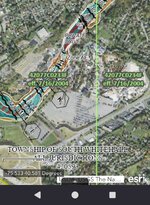
The area north of the creek is a steep hill that is not suitable for large structures, plus there are power lines that run over the boneyard. The land on the South side of the creek is way too small for the new warehouses that are being built in the area, especially after taking into account the property boundary setback requirements. (Minimum 50 foot setbacks for commercial. There is only about 100 acres south of the creek that is clear of the flood plain).
Selling the land for residential development makes no sense, as it would be worth less than $20,000,000 for residential development. ($100,000 per acre for building plots is a bit high in the market, but the location is good.) If all the land were to be used for apartments, the maximum units would be 700, and that is assuming the highest residential density allowed in the township. (Unlikely the area could be zoned to R-10, as the residential land surrounding the park is zoned to R-5 or less.)
Edit: spelling.
Last edited:

Trademarks are pretty easy and cheap to file. You can even go through something like LegalZoom for a few hundred bucks. Main thing is the trademarks won't be enforceable if they aren't actually using them in practice.They wouldn’t have hired a lawyer and filed the trademark application if they weren’t serious. lol.
EPR EXCAVATE, LLC was formed on 12/03/2024 and the Diggerland USA acquisition was announced on 01/09/2025.
https://www.accessnewswire.com/news...ment-acquires-diggerland-usa-to-expand-965732
ENCHANTED PARKS HOLDINGS, LLC was formed on 12/18/2025. I could see this deal taking longer to announce due to the number of parks involved.

https://www.accessnewswire.com/news...ment-acquires-diggerland-usa-to-expand-965732
ENCHANTED PARKS HOLDINGS, LLC was formed on 12/18/2025. I could see this deal taking longer to announce due to the number of parks involved.
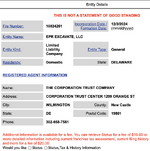
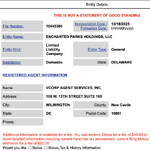
Last edited:
I've been hearing this story for years. And there's no proof of what you say.Dorney Park is absolute cash-cow for the chain - it generates significant revenue with minimal investment. It's not going anywhere.
Dorney is a small park that makes a small park's profit.
They could easily get rid of it and no one would mourn its passing.

no one would mourn its passing.
False. I love Dorney and would mourn its passing.

No enthusiast from another part of the world, maybe. It could also be said that "no one" would mourn the closure of any of your European parks, if you were talking about US residents.They could easily get rid of it and no one would mourn its passing.
I can say that the local community absolutely would, along with everyone who appreciates classic coasters - Dorney is home to the 4th oldest operating coaster in the US.

You need to add an "s" to the front of your username after that response. The local residents and economy would absolutely mourn is passing, as well as many us-based enthusiasts. What an incredibly narrow-minded take.I've been hearing this story for years. And there's no proof of what you say.
Dorney is a small park that makes a small park's profit.
They could easily get rid of it and no one would mourn its passing.

TheCoasterNerd
Previously known as @coasters_bgw
Same could be said about some of your parks, and it'd be just as true. Just a small theme park making small theme park money, they could easily get rid of, say, Walibi Rhone-Alpes. Nobody would care if WRA closed, right? Just a small, insignificant park.I've been hearing this story for years. And there's no proof of what you say.
Dorney is a small park that makes a small park's profit.
They could easily get rid of it and no one would mourn its passing.
Any park that closes, no matter how small, tons of people mourn their closures. Look at Six Flags America. Small park, low attendance near the end, but for the last month of operations, it was nearly at capacity most days, and it made national news and was #4 trending on Twitter on Nov 2
Last edited:

Dorney could be sold off just as easily as any of the middle or lower-tier parks that is in good shape (and with a recent coaster addition this decade, shades of WOF).
Behind the scenes we know that the PR guy Ryan Eldredge is still with both properties, and I could see a market synergy for having both parks on the same pass. Dorney and Great Adventure are not too close enough to split the massive Philly/NYC market, and Dorney has maybe better highway access directly from Philly via the PA Turnpike/I-78 that really helps it.
Behind the scenes we know that the PR guy Ryan Eldredge is still with both properties, and I could see a market synergy for having both parks on the same pass. Dorney and Great Adventure are not too close enough to split the massive Philly/NYC market, and Dorney has maybe better highway access directly from Philly via the PA Turnpike/I-78 that really helps it.
Last edited:
I found a good 45 minute interview with James Harhi, CEO of IAM, from August 2024. Around the 35:20 mark he says they plan on buying more parks and have the financing ready to go. After listening to the interview, I think people are underestimating that amount of experience these guys have with the industry.
James Harhi CEO of IAM | Podcast Episode on RSS.com
James Harhi CEO of IAM | Podcast Episode on RSS.com

I tend to believe Dorney makes money, and in "normal" circumstances it would be a valuable asset to Six Flags. These are not "normal" times and it may not make as high a profit as they are looking for from a park. They even said that even the parks that make money may not be safe from sale or closure.

The trademark for the park probably was just not filed yet. I'm sure it will be. It would make no sense for a separate company to operate the lodge and not the park.I wonder why Great Escape Lodge tho and not the park…
I wonder why Great Escape Lodge tho and not the park…
Just throwing this out there: Great Escape Lodge is the only location that makes sense to me for the concept of the "Six Flags brings in a company to operate something while retaining ownership" idea that seems to be floating around. Resort hotels and ticket packages are usually lucrative, but it's possible that maybe bookings are down, the facility needs more renovations that Six Flags can't justify, or potentially issues with a year-round staff* that could give them a reason to separate this specific entity.The trademark for the park probably was just not filed yet. I'm sure it will be. It would make no sense for a separate company to operate the lodge and not the park.
THAT SAID, I still think this won't happen in the end. While these businesses are run together, they could just share a parking lot and Six Flags could collect a passive income while someone else runs the day-to-day at the Great Escape Lodge, and keeps the ticket packages intact with the park across the road. For Six Flags Great Escape, I could see this being a more calculated risk, since the park already has a waterpark and they wouldn't be dividing up the land too much (or not at least in the way that, for example, Worlds of Fun/Oceans of Fun would be).
* (Six Flags has done a lot of layoffs and cut some critical staff out of the company down to a skeleton crew - it's possible that they don't want to pay for year-round front-facing employees in non-management/maintenance/security roles? If so, that could also include Castaway Bay, which is also in the same position outside the park and operating year-round with less dates in the off-season. I'm not sure how much value these properties add to the bottom line when the parks are closed, and unlike full-blown parks, this would be much less controversial to offload. This idea doesn't make me feel great because some outside operator could jack up prices or close for longer periods over the Winter, but I could see how Corporate would also like to collect a check for these properties while someone else runs them. Food for thought.)
Last edited:
Someone on Reddit thought it's freakin fake! Like dude, there's proof of it's existence.
Direct Link to Embedded Media Source
Direct Link to Embedded Media Source
Share:
Consider Donating to Hide This Ad