
I disagree. In the general perception for much of the public, we are about three inches away from being The Walking Dead. People who dare to suggest we should try to re-open parts of the economy, are raked over the coals as uncaring morons. Liability is not the reason Busch doesn't seek injunction and re-open. They're just smart enough to know that it would be horrible PR and not enough people would come right now to make it worth the while.
COVID-19’s Impacts on BGW
- Thread starter WDWRLD
- Start date
You are using an out of date browser. It may not display this or other websites correctly.
You should upgrade or use an alternative browser.
You should upgrade or use an alternative browser.
Register or Login to Hide This Ad for Free!

Liability is absolutely the reason they won’t open. Look at the lawsuits already occurring against the cruise ships. BGW can see that scenario clearly and wants nothing of it, not to mention possible criminal charges against it and its executives for recklessly endangering guests and employees.I disagree. In the general perception for much of the public, we are about three inches away from being The Walking Dead. People who dare to suggest we should try to re-open parts of the economy, are raked over the coals as uncaring morons. Liability is not the reason Busch doesn't seek injunction and re-open. They're just smart enough to know that it would be horrible PR and not enough people would come right now to make it worth the while.
If bad PR was the issue, BGW would be open right now and simply take the PR hit to get revenue coming in. Nobody shuts down long term just because of some bad press or protests. They do so because the risks and costs of opening outweigh the financial benefits,


Especially given SEAS’ recent experience with Blackfish, I doubt any of us know for certain how the company is weighing PR versus revenue versus liability, or even if there are other more important factors. Debating opinions are fine, but keep in mind that unless you have a good source or are in the room for those discussions, they are nothing more than educated guesses.
If there was no possibility for BGW to be liable for any employee or customers getting sick, BGW would get an injunction against the governors EOs and open the parks immediately. While BGW may not get successfully sued for any single case, if someone demonstrates unsafe procedures or BGW not following health guidelines liability is pretty likely. If a customer got sick or died from salmonella because food wasn‘t properly prepared, you can bet that BGW will find itself defending and settling a lawsuit - no difference with COVID-19.
I don’t think the only reason they decided to close is so they don’t get sued. Opening right now would be against the law. They probably would not get an injunction, even if they decided to take the issue to court.
There is a difference between a BGE employee preparing food improperly and customers getting sick, than customers going to the park knowing there is a virus on the loose and getting sick soley from their desire to go to an amusement park.
So on this topic of this:
I think that equating salmonella with coronavirus in terms of legal liability is going to be a tough one. Preventing salmonella is easy and something very much within BGW's control of cooking, keeping at right temperatures, taking it off the line at the right time, prepping meat within proper timelines, dethawing at the right times.
Given the fact that without a vaccine there's no 100% way to prevent any spread of coronavirus and COVID-19. In my sports law class, we've talked about a thing called inherent risk. Without the vaccine there's an inherent risk that going out to somewhere that you can catch coronavirus. Also it's going to be very hard to prove exactly where the virus was picked up. As much as someone could say it's because they could sit on a bench that wasn't cleaned, BGW could ask if you ensured that no one came with 6 feet, that no one sneezed or coughed on you, and on and on.
I think that equating salmonella with coronavirus in terms of legal liability is going to be a tough one. Preventing salmonella is easy and something very much within BGW's control of cooking, keeping at right temperatures, taking it off the line at the right time, prepping meat within proper timelines, dethawing at the right times.
Given the fact that without a vaccine there's no 100% way to prevent any spread of coronavirus and COVID-19. In my sports law class, we've talked about a thing called inherent risk. Without the vaccine there's an inherent risk that going out to somewhere that you can catch coronavirus. Also it's going to be very hard to prove exactly where the virus was picked up. As much as someone could say it's because they could sit on a bench that wasn't cleaned, BGW could ask if you ensured that no one came with 6 feet, that no one sneezed or coughed on you, and on and on.
An EO is an implementation of the law, not the law itself, and can be argued in court whether or not it's a legal implementation. I would say BGW would more likely than not get a temporary injunction as they are the party far more likely to be harmed than the State. There have been other injunctions already related to COVID-19 orders coming out as many of them are stretching what is allowed constitutionally.I don’t think the only reason they decided to close is so they don’t get sued. Opening right now would be against the law. They probably would not get an injunction, even if they decided to take the issue to court.
There is a difference between a BGE employee preparing food improperly and customers getting sick, than customers going to the park knowing there is a virus on the loose and getting sick soley from their desire to go to an amusement park.
So on this topic of this:
I think that equating salmonella with coronavirus in terms of legal liability is going to be a tough one. Preventing salmonella is easy and something very much within BGW's control of cooking, keeping at right temperatures, taking it off the line at the right time, prepping meat within proper timelines, dethawing at the right times.
Given the fact that without a vaccine there's no 100% way to prevent any spread of coronavirus and COVID-19. In my sports law class, we've talked about a thing called inherent risk. Without the vaccine there's an inherent risk that going out to somewhere that you can catch coronavirus. Also it's going to be very hard to prove exactly where the virus was picked up. As much as someone could say it's because they could sit on a bench that wasn't cleaned, BGW could ask if you ensured that no one came with 6 feet, that no one sneezed or coughed on you, and on and on.
There's inherent risk in going to the park, but the park has a legal responsibility to take reasonable measures to avoid harm to its guests. If someone walks around the park purposely coughing on people, there isn't much the park can do beyond removing the perpetrator from the park and rectifying that situation. However if someone gets a bunch of people sick because they are all together in a confined space in the park that could have reasonably been altered, the park would be open to liability.
It's true that any single individual COVID-19 case would be hard to trace to BGW, but if dozens or hundreds of visitors get sick that all went to the park, BGW is going to be open to a big class action suit. That's the big calculus right now. Can the park open safely enough to avoid massive liability and possible criminal negligence if several visitors and employees ended up dying from this virus.
You guys do know that all of these answers can be right? The park may not necessarily be definitively following a single approach. They may determine that the money isn't there, it may not be legally feasible, and it may be bad press altogether. These things are not truly independent of each other.
Could be a long summer, as January 1 was mentioned as a "base case" for the reopening of Disney parks in UBS' downgrade of Disney this morning...
"Park re-opening now Jan 1 base case; profitability likely impaired until vaccine. We believe Parks’ profitability will be impaired for a longer period of time given the lingering effects of the outbreak and now assume an opening date of Jan 1 as our base case."
 www.cnbc.com
"Park re-opening now Jan 1 base case; profitability likely impaired until vaccine. We believe Parks’ profitability will be impaired for a longer period of time given the lingering effects of the outbreak and now assume an opening date of Jan 1 as our base case."
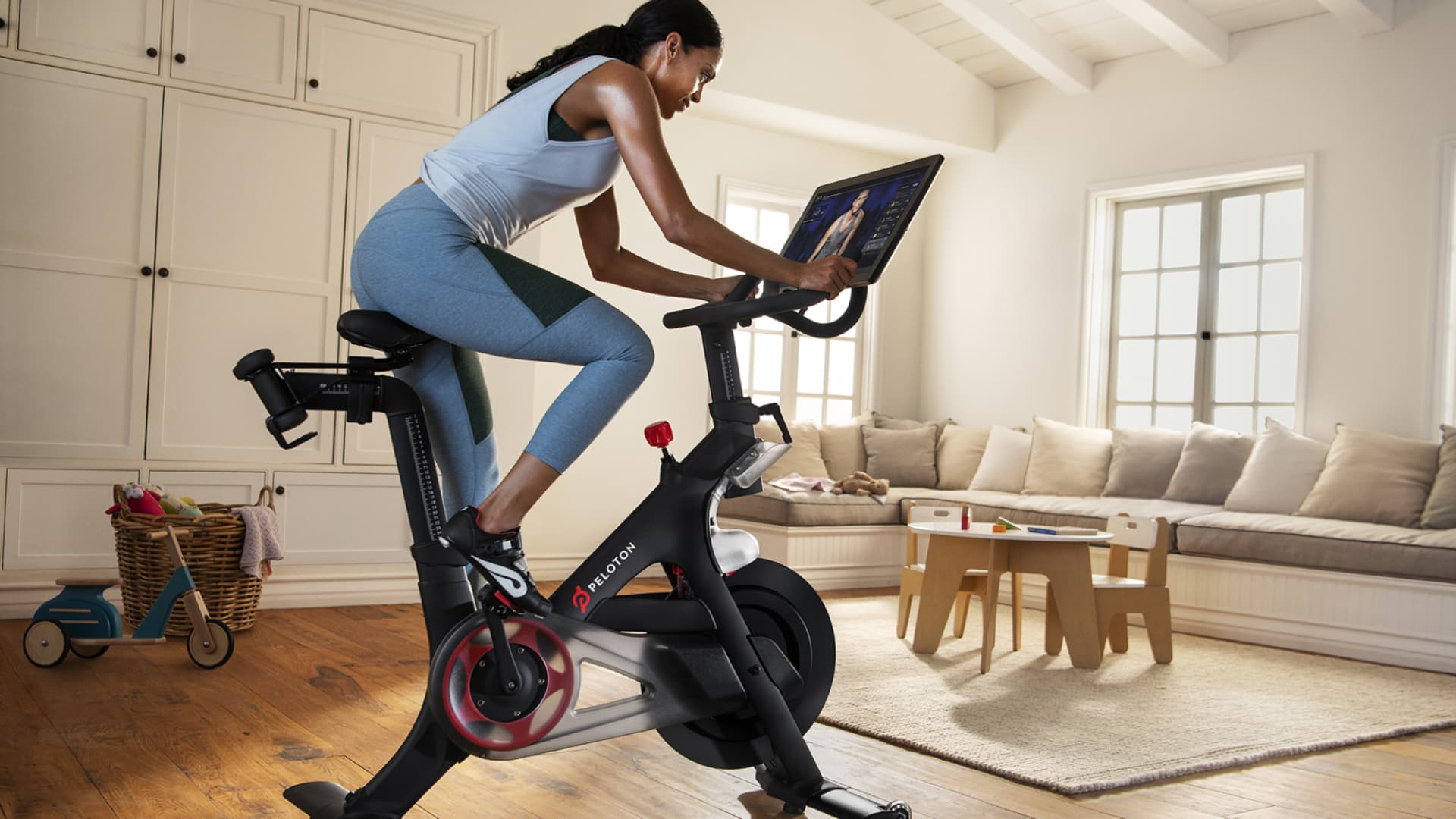
Analysts downgrade some key stocks, including Disney and Peloton, as the rebound may have gone too far
Here are the biggest calls on Wall Street on Monday
www.cnbc.com
@rswashdc IMO that assumes if the park opens before any order is lifted. If the state government lifts restrictions on gathering, says you can go to full capacity, and then someone gets sick, there's not really much legal discourse for someone to say that BGW is at fault if they are adhering to what it allowed at the time. There would likely be more success in suing the park over, say in limited operations getting sick because you got on a ride that wasn't cleaned between passengers vs say being allowed to fill Abbey Theater to capacity and someone getting sick.
So lets say a vaccine comes out, and there's measures out for how to clean confined spaces, and all of that is adhered to, but 50 people catch it in one day....I'm afraid there's not going to be much that they could get out of it. Especially if it's people that haven't gotten the vaccine. As much as people can sue for a variety of things, there are a certain amount of protections that a place like BGW has against lawsuits.
So lets say a vaccine comes out, and there's measures out for how to clean confined spaces, and all of that is adhered to, but 50 people catch it in one day....I'm afraid there's not going to be much that they could get out of it. Especially if it's people that haven't gotten the vaccine. As much as people can sue for a variety of things, there are a certain amount of protections that a place like BGW has against lawsuits.

I’m not a legal expert, so I have a serious (non-rhetorical) question for someone who knows better than I do. Why would BGW be held legally responsible for someone contracting the coronavirus, versus the standard influenza, which hospitalizes around 55,000 Americans a year? Obviously there’s a difference of a few percentage points in the mortality rate, but from a legal perspective, why would BGW assume responsibility for the former and not the latter? Serious question.
I’m not a legal expert, so I have a serious (non-rhetorical) question for someone who knows better than I do. Why would BGW be held legally responsible for someone contracting the coronavirus, versus the standard influenza, which hospitalizes around 55,000 Americans a year? Obviously there’s a difference in a few percentage points in the mortality rate, but from a legal perspective, why would BGW assume responsibility for the former and not the latter? Serious question.
Theres where some inherent risk comes in. If BGW does what they are supposed to do from a legality standpoint and someone still gets it, there’s unlikely much to be done.
It depends on the actions/inactions BGW takes to allow spreading of the virus - e.g. if an employee was determined to be the cause of a flu outbreak at the park because they were working while sick near guests or say 50 people get sick inside the theater because there isn't adequate ventilation the park would be certainly liable. If you got sick at the park because a guest near you coughed on you in a walkway (before the social distancing rules were in effect), then the park would probably not be liable as they couldn't reasonably be expected to mitigate that.I’m not a legal expert, so I have a serious (non-rhetorical) question for someone who knows better than I do. Why would BGW be held legally responsible for someone contracting the coronavirus, versus the standard influenza, which hospitalizes around 55,000 Americans a year? Obviously there’s a difference of a few percentage points in the mortality rate, but from a legal perspective, why would BGW assume responsibility for the former and not the latter? Serious question.
This is an older lawsuit at a Six Flags park (https://dailygazette.com/article/2013/05/08/0508_waterprk), but it shows that the parks can be successfully sued for letting outbreaks occur on their property.
I’m not a legal expert, so I have a serious (non-rhetorical) question for someone who knows better than I do. Why would BGW be held legally responsible for someone contracting the coronavirus, versus the standard influenza, which hospitalizes around 55,000 Americans a year? Obviously there’s a difference of a few percentage points in the mortality rate, but from a legal perspective, why would BGW assume responsibility for the former and not the latter? Serious question.
Firstly, it is really unfair to compare the two diseases. By comparing the two, you downplay the seriousness of the pandemic. There are a few factors that affect the numbers. For example, the stay-at-home orders and social distancing have greatly reduced the risk of infections and therefore the risk of deaths as well. If those measures were not taken, the infection rate and death toll could have been significantly higher.
To your question though, I imagine that it comes down to perspective. This particular virus has reached the level of being a pandemic. This has resulted in governments issuing new social guidelines and order to not leave your home. There are PPE requirements. Whereas, with your average flu, special PPE is not required, and that as long as you have basic and good hygiene, you should be fine.
Firstly, it is really unfair to compare the two diseases. By comparing the two, you downplay the seriousness of the pandemic. There are a few factors that affect the numbers. For example, the stay-at-home orders and social distancing have greatly reduced the risk of infections and therefore the risk of deaths as well. If those measures were not taken, the infection rate and death toll could have been significantly higher.
To your question though, I imagine that it comes down to perspective. This particular virus has reached the level of being a pandemic. This has resulted in governments issuing new social guidelines and order to not leave your home. There are PPE requirements. Whereas, with your average flu, special PPE is not required, and that as long as you have basic and good hygiene, you should be fine.
I understand what you're saying, but does the law make a distinction for a disease's "seriousness"? What I'm asking if there's a legal, not a perceptual, difference in a disease that's part of a pandemic and one that isn't. (Again, serious question. Not arguing or anything.)
I think the issue I'm seeing here is some level of miscommunication. No park is going to open when any restrictions are in place. And if there's new standards of health in place, all parks will legally have to follow it as well.
So parks open under new health codes, when they are legally able to open, and someone still gets sick, I think there's going to be little grounds for a case. If a park were to open right now and say they aren't doing anything? Yea they'll get the crap sued out of them. But if they follow everything they are supposed to, and they are allowed to open, and someone still gets sick, its going to be hard to take a case against them. Like I said, as much as is out there to legally protect the consumer, the road goes both ways and BGW is protected to a certain degree.
So parks open under new health codes, when they are legally able to open, and someone still gets sick, I think there's going to be little grounds for a case. If a park were to open right now and say they aren't doing anything? Yea they'll get the crap sued out of them. But if they follow everything they are supposed to, and they are allowed to open, and someone still gets sick, its going to be hard to take a case against them. Like I said, as much as is out there to legally protect the consumer, the road goes both ways and BGW is protected to a certain degree.
Most lawsuits would be looking at whether BGW employees were actually following new health codes, not whether they existed at all as BGW almost certainly will implement new safety procedures. The main issue BGW has (and really most companies) is that employees may not actually follow the new procedures to a tee and either take shortcuts or disregard procedures they don't think make sense - e.g. an employee takes fever medicine and comes to work getting numerous guests sick despite rules saying they must stay home.I think the issue I'm seeing here is some level of miscommunication. No park is going to open when any restrictions are in place. And if there's new standards of health in place, all parks will legally have to follow it as well.
So parks open under new health codes, when they are legally able to open, and someone still gets sick, I think there's going to be little grounds for a case. If a park were to open right now and say they aren't doing anything? Yea they'll get the crap sued out of them. But if they follow everything they are supposed to, and they are allowed to open, and someone still gets sick, its going to be hard to take a case against them. Like I said, as much as is out there to legally protect the consumer, the road goes both ways and BGW is protected to a certain degree.
Most lawsuits would be looking at whether BGW employees were actually following new health codes, not whether they existed at all as BGW almost certainly will implement new safety procedures. The main issue BGW has (and really most companies) is that employees may not actually follow the new procedures to a tee and either take shortcuts or disregard procedures they don't think make sense - e.g. an employee takes fever medicine and comes to work getting numerous guests sick despite rules saying they must stay home.
But again with that thought line and this strain of coronavirus, since you can carry it and by asymptomatic, it's going to be really hard for someone to prove exactly where they got it from.
Sure an employee could come in being sick with possibly this strain, but that doesn't mean they got it from them. Maybe a teen that's asymptomatic moved around to 8 different spots in a theater, then people picked it up from those surfaces, and then they bumped other people and next thing you know 30 people walk out of that theater coming in contact with it. This isn't like other health code items that's very easy to track. Salmonella which comes from most often undercooked food is easy to trace to a stand, what workers were there, and who did what. Given that something like a virus can come from an employee or a guest, it's unlikely that BGW (or really any park) would be able to be pegged as the sole reason someone got the virus.
Hence why testing and contact tracing is such a big part of reopening aspects of economies and they it's such a big undertaking. In your average day pre-pandemic, how many people would you say you come into contact (not physical just near) with? 50-150? Now each one of them does the same and that's 2500-22500 people that possibly came into contact with it because you were sick. Now do the same thing with BGW but assume the contact was a guest. That number could be the whole park quickly.
And something that lives on surfaces like this can lead to a 'false source' so to speak. The person with it pays in cash with a bunch of 5's for their lunch (extremely unlikely but this is for the point). 5-$5 bills into the till. Safe to say most the bills would be contaminated, then everyone that get's change from that. Even if they sanitize their hands between every touch of a bill and or coin it still would spread and it's not BGW's fault at all that happened. What if someone had it and went into a merchandise shop and touched 50 different things possibly contaminating the shop and all those things got either bought or touched by someone else. Yea if a cashier is sick some of the people that get it might come from the cashier, but there still could be plenty of people that never came close to that cashier that got it.
In the end there is a burden of proof that the person pursuing the lawsuit needs to prove that it was because something BGW did as to why they got sick, and I see that being very hard to prove with my non-lawyer POV examples there. It's why lawsuits off non-traceable illnesses are so hard to pursue. It's so hard to pin the source and know the exact origin of it.
I don't think you would see an individual filing a lawsuit because as you noted it would be very hard to pinpoint exactly how a single individual got it. More likely would be a class action suit where dozens or hundreds of individuals got sick and it's all traced to the park or one part of the park on the same day/time.But again with that thought line and this strain of coronavirus, since you can carry it and by asymptomatic, it's going to be really hard for someone to prove exactly where they got it from.
Sure an employee could come in being sick with possibly this strain, but that doesn't mean they got it from them. Maybe a teen that's asymptomatic moved around to 8 different spots in a theater, then people picked it up from those surfaces, and then they bumped other people and next thing you know 30 people walk out of that theater coming in contact with it. This isn't like other health code items that's very easy to track. Salmonella which comes from most often undercooked food is easy to trace to a stand, what workers were there, and who did what. Given that something like a virus can come from an employee or a guest, it's unlikely that BGW (or really any park) would be able to be pegged as the sole reason someone got the virus.
Hence why testing and contact tracing is such a big part of reopening aspects of economies and they it's such a big undertaking. In your average day pre-pandemic, how many people would you say you come into contact (not physical just near) with? 50-150? Now each one of them does the same and that's 2500-22500 people that possibly came into contact with it because you were sick. Now do the same thing with BGW but assume the contact was a guest. That number could be the whole park quickly.
And something that lives on surfaces like this can lead to a 'false source' so to speak. The person with it pays in cash with a bunch of 5's for their lunch (extremely unlikely but this is for the point). 5-$5 bills into the till. Safe to say most the bills would be contaminated, then everyone that get's change from that. Even if they sanitize their hands between every touch of a bill and or coin it still would spread and it's not BGW's fault at all that happened. What if someone had it and went into a merchandise shop and touched 50 different things possibly contaminating the shop and all those things got either bought or touched by someone else. Yea if a cashier is sick some of the people that get it might come from the cashier, but there still could be plenty of people that never came close to that cashier that got it.
In the end there is a burden of proof that the person pursuing the lawsuit needs to prove that it was because something BGW did as to why they got sick, and I see that being very hard to prove with my non-lawyer POV examples there. It's why lawsuits off non-traceable illnesses are so hard to pursue. It's so hard to pin the source and know the exact origin of it.
Seeing that social distancing and contactless transactions will almost certainly be part of any re-opening while the virus is still around, BGW would need to reasonably execute a plan that doesn't allow such an outbreak to occur. That means things such as removing cash transactions, not allowing customers to touch things in shops, cleaning rides regularly, etc.
And the only way to do that without a vaccine in place is by not opening. It's going to be very difficult for there to be any proof that it was because of BGW. And that would mean everyone in that class action lawsuit avoided all the pitfalls, not one person in those groups did anything different from a different person, they didn't stop anywhere that wasn't BGW/their car/their house that entire time. Also means there you would have to show that absolutely no one touched anything, another passenger on your ride didn't have it and touch a surface as you got in, someone else on ride didn't sneeze or anything as you passed by possibly close to other riders. Given the incubation time of the virus that you did absolutely nothing the 5-7 days before and after.
Basically it's impossible to prove that BGW was the source.
Basically it's impossible to prove that BGW was the source.
This information isn't actually too hard to put together with contact tracing and in the case of an outbreak there will be a lot common tracing to the park. 5-7 days seems like a lot, but that's basically going to the park on Sunday and being very sick the next Friday. If the person was working from home, they may not have even gone anywhere else during that period. Also, if there's an outbreak among guests, there would probably be one in parallel with employees which will provide more evidence to the cause. Considering the fatality rate of COVID-19, if they all commonly trace to visting BGW or another park, a lot of lawyers are going to be looking at the possibility of huge lawsuits (8-9 figures if multiple deaths occur) as incentive to do the legwork in putting a case together.And the only way to do that without a vaccine in place is by not opening. It's going to be very difficult for there to be any proof that it was because of BGW. And that would mean everyone in that class action lawsuit avoided all the pitfalls, not one person in those groups did anything different from a different person, they didn't stop anywhere that wasn't BGW/their car/their house that entire time. Also means there you would have to show that absolutely no one touched anything, another passenger on your ride didn't have it and touch a surface as you got in, someone else on ride didn't sneeze or anything as you passed by possibly close to other riders. Given the incubation time of the virus that you did absolutely nothing the 5-7 days before and after.
Basically it's impossible to prove that BGW was the source.
Share:
Consider Donating to Hide This Ad