Register or Login to Hide This Ad for Free!
This might be helpful.


HIPAA isn't applicable. ADA seems to allow requiring masks.
That is far more complex then does ADA allow it or not. Yes it does but the real question is not does it allow it but does the constraints that ADA places on what a business can and can not do in questioning a person allow for someone to abuse it and lie. A good example is that ADA doesn't allow for pets to be brought into businesses but the realty is people falsely claim that their pet is a serves animal which ADA allows for. As a business is not allowed to ask why you need the animal and are only allowed to inquire as to what they do and even that has to be done carefully to insure that you don't pry to deep into what it does an effort to determine the person's disability. Apply that same standard not wearing a mask and I not sure how you would even begin to inquire into why someone is not wearing one without possibly getting into a situation that could possibly get you in trouble.
 
Section D Part 6 of the Virginia Executive Order explains health conditions not having to wear a mask or covering the paragraph after states a person does not have to have any documentation and does not have to identify the medical condition.
 
ADA requires businesses to provide reasonable accommodations for those with disabilities. Social distancing is a reasonable accommodation to mask wearing so it‘s going to be very hard for a park to argue they can’t accommodate someone who can’t wear a mask under most conditions in the park. The parks may be able to make arguments that letting a person wander around a busy confined space (e.g. a shop) can’t be allowed, but they would need to provide other accommodations for those individuals such as the store clerk bringing items outside for contactless shopping.

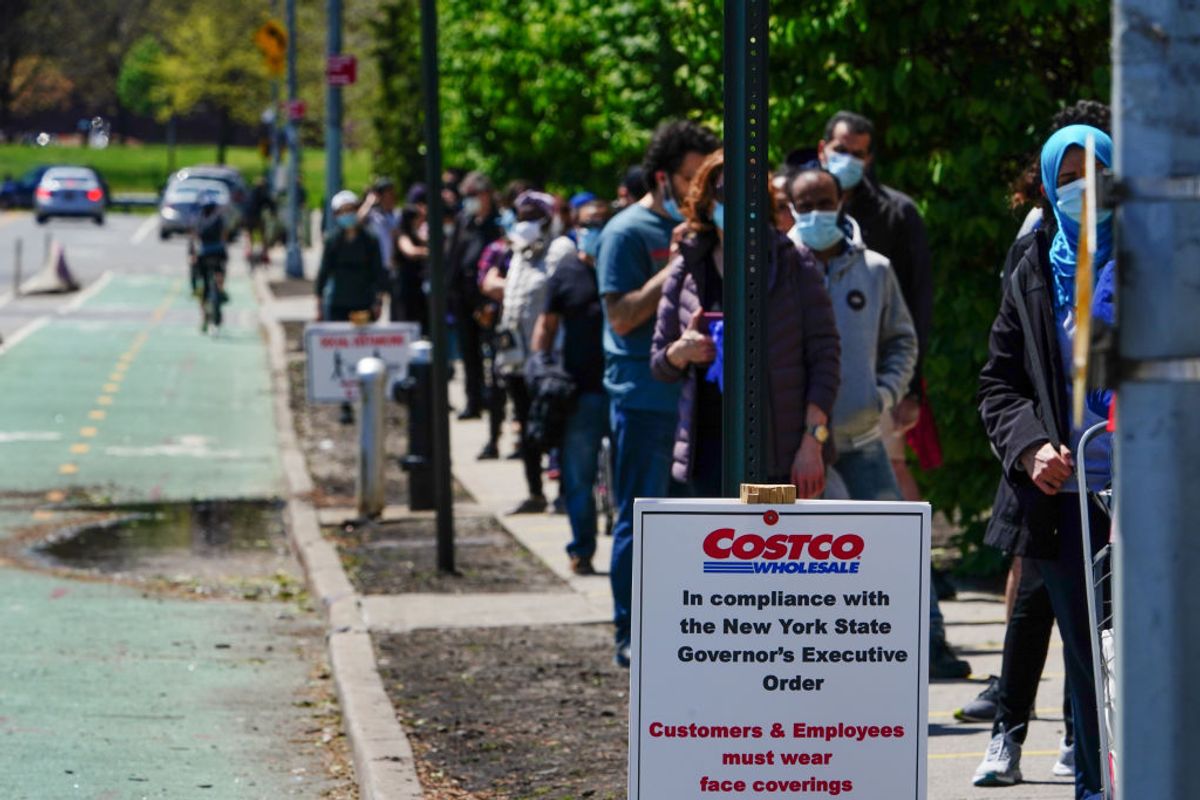
The state EOs that have come out requiring or recommending masks all have exceptions for individuals with disabilities or health conditions as the orders would run afoul of ADA otherwise.
 
Businesses can, and do ask why you need an accommodation. Simply stating that you have a disability, or that your animal is a service animal is not enough.
Businesses can ask what accommodation you need, but the why can get into areas of privacy if done incorrectly.

My take is the parks are not going to want front line personnel trying to figure out masks accommodations for people with health issues or disabilities, as I’d guess upwards of 10%+ of guests are not able to wear a mask all day or at all. They will likely point out the policy and/or provide a special accommodations notice of sorts.

The case I could see intervention occurring would be where a group was likely flaunting the rule - e.g. a group of 6 all claiming disabilities that makes them unable to wear a mask, vice a more reasonable one or two members of a group doing so.
 
Could parks provide some sort of identification, like a colored wristband, that notifies employees that a guest can’t wear a face mask? I don’t know if a park could require people to wear this, but maybe they could offer them as an option, so guests could voluntarily choose to wear the wristband to avoid confrontations later.
 
  • Like
Reactions: Alf33 and warfelg
Could parks provide some sort of identification, like a colored wristband, that notifies employees that a guest can’t wear a face mask? I don’t know if a park could require people to wear this, but maybe they could offer them as an option, so guests could voluntarily choose to wear the wristband to avoid confrontations later.

I think that would be smart. Almost a “get ahead solution. Maybe suggest to them to wear a certain color hat or shirt if you won’t be wearing a mask. Like red so people know you have a reason not to wear one and to make sure you give space.
 
I think that would be smart. Almost a “get ahead solution. Maybe suggest to them to wear a certain color hat or shirt if you won’t be wearing a mask. Like red so people know you have a reason not to wear one and to make sure you give space.

Maybe, but then I’d be concerned that people could easily abuse the system since just anyone could show up in a certain color hat or shirt.

I was thinking more along the lines of those height check wristbands they give kids - measure the kids once and give them a wristband, so then ride operators don’t have to measure them again and again all day. In this case, people would only have to demonstrate they can’t wear a mask once, get the wristband, and then avoid being confronted the rest of the day. It’s not a perfect system, but it might make the day less inconvenient for people who can’t wear masks.

 
Maybe, but then I’d be concerned that people could easily abuse the system since just anyone could show up in a certain color hat or shirt.

I was thinking more along the lines of those height check wristbands they give kids - measure the kids once and give them a wristband, so then ride operators don’t have to measure them again and again all day. In this case, people would only have to demonstrate they can’t wear a mask once, get the wristband, and then avoid being confronted the rest of the day. It’s not a perfect system, but it might make the day less inconvenient for people who can’t wear masks.
If it's like other accessibility programs, it would be something provided from guest services. Wristbands would probably be a decent way to subtly indicate someone has special accommodation for employees, though other guests may not know and either give the non-mask wearer a hard time or believe that mask wearing isn't required.
 
  • Like
Reactions: Mushroom
If it's like other accessibility programs, it would be something provided from guest services. Wristbands would probably be a decent way to subtly indicate someone has special accommodation for employees, though other guests may not know and either give the non-mask wearer a hard time or believe that mask wearing isn't required.

I dunno, putting big signs and announcements on the entrance PA system about seeing guest services for accommodations including wristbands may help. If all guests are generally made aware that a wristband could mean ADA accommodation instead of just a height check then the possibility of complaints goes down.
 
This all seems like a total nonissue to me. Disney has a strict no exceptions mask policy. Why wouldn't every other park follow their lead?

Can't wear a mask because of a medical issue? I feel for you but, sorry, you pose an increased threat to the other guests—letting you visit Busch Gardens Williamsburg right now is unfair to everyone else in the park. Extend those people's tickets or freeze their memberships till masks are no longer required. There's no reason for in-park exceptions.
 
My only concern is the volume of guests who need accommodations for masks may be far higher than the typical volume of guests that need ADA accommodations through guest services. Something like 10% of Americans have asthma or other serious breathing issues, another 1-2% have autism, plus others with PTSD or other reasons they can't wear a mask at all or can't wear one all day, you could easily need accommodations for 10-15% of guests coming in.
 
This all seems like a total nonissue to me. Disney has a strict no exceptions mask policy. Why wouldn't every other park follow their lead?

Can't wear a mask because of a medical issue? I feel for you but, sorry, you pose an increased threat to the other guests—letting you visit Busch Gardens Williamsburg right now is unfair to everyone else in the park. Extend those people's tickets or freeze their memberships till masks are no longer required. There's no reason for in-park exceptions.
Has Disney actually put out a no exception policy for the parks or just Disney Springs. Universal has stated they will have accommodations and I'd be surprised if other parks didn't as well as disabled guests are a non-trivial portion of most parks attendance.

If there are concerns about increased threats at BGW from mask-less guests, I'd be more concerned about guests who work on-site at their job and have constant close contact with others vice guests with a medical issue who work from home. The second group is far less likely to be contagious in the first place and masks are no panacea for preventing transmission from a contagious guest, just a risk reducer.
 
My only concern is the volume of guests who need accommodations for masks may be far higher than the typical volume of guests that need ADA accommodations through guest services. Something like 10% of Americans have asthma or other serious breathing issues, another 1-2% have autism, plus others with PTSD or other reasons they can't wear a mask at all or can't wear one all day, you could easily need accommodations for 10-15% of guests coming in.

While true, it probably should be said that people with asthma or any other serious breathing issue are an at-risk group and maybe shouldn't be going to a busy theme park early on in our recovery. Worrying about a mask complicating their condition seems to be massively missing the forest for the trees.

.
 
All of Walt Disney World property—2 years and older, no exceptions.

Has Disney actually stated they will not make exceptions or has the website not been updated yet with how they will accommodate. They aren't opening for another month and a half so I'd assume not everything has been figured out yet. If they put a no accommodation policy, they are pretty much asking to have lawsuits coming their way.
 
There are no exceptions at Disney Springs and the language is shared. Why would the policy be different? If anything, restrictions should be more relaxed at Disney Springs.

There is case law that carves out ADA exceptions for public health. Disney has an army of lawyers who know 1000x more about all of this than either of us. I'm confident that Disney's lawyers have done their homework and have all their ducks in a row. If these policies were illegal, Disney wouldn't institute them.
 
Has Disney actually put out a no exception policy for the parks or just Disney Springs. Universal has stated they will have accommodations and I'd be surprised if other parks didn't as well as disabled guests are a non-trivial portion of most parks attendance.

Are parks that are already limiting attendance really going to be concerned by a reduction in the number of potential guests?
 
Consider Donating to Hide This Ad