Register or Login to Hide This Ad for Free!
Nevertheless, the "thump-thump click-click-click" of the train leaving the transfer into the station is one of my favorite sounds of that ride

I'm finally catching back up on everything after some time away from the forums, and since you brought it up - what causes these noises? I'm thinking the thumps are simply wheels going over the small gap, but the clicks are unknown. I wouldn't think they'd want the dogs to be smacking into anything so regularly if that's what that is.

That’s a top 3 BGW sound for sure. Right up there with the classic train whistle and “clop-clop-clop hisss” sound of Nessie’s station brakes for me.

Nessie's friction brakes go right up there with the classic clanking of the arbs on the lift. However for brake noises I prefer the hiss and clap noises of them opening up accept the next train followed by the low rumble of the train entering the station.
 
I'm finally catching back up on everything after some time away from the forums, and since you brought it up - what causes these noises? I'm thinking the thumps are simply wheels going over the small gap, but the clicks are unknown. I wouldn't think they'd want the dogs to be smacking into anything so regularly if that's what that is.


Nessie's friction brakes go right up there with the classic clanking of the arbs on the lift. However for brake noises I prefer the hiss and clap noises of them opening up accept the next train followed by the low rumble of the train entering the station.
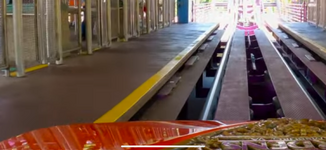
The lighter clicks are the electrical contacts from the AS-i system making contact with the train. Each row has these to monitor harness positions. The louder thumps are the transfer track gap.
 
There is 3 different sounds as the train enters the station - the anti rollbacks, chaindog, & gap in the transfer table. There is a green plastic piece directly after the transfer that is in the shape of a hill sorta. It lifts the dog &rollbacks up then lowers it down. Then there is a sensor that then counts each one to ensure none of them fall out.
 
Why does Apollo trim so aggressively, I don’t think any B&M hyper ive been (4)trims as hard Apollo’s. Look at Great America, they just run raging bull how they want to. Same thing with Alpie, although it’s just the MCBR. Feels like Apollo utilizes all of its trims and depending on the train they don’t hit hard consistently.
 
  • Like
Reactions: Mwe BGW
Interestingly enough, Ryan the Ride Mechanic just had a video all about trims.

From that, I'm going to go out in a limb and guess it's either an attempt to limit wear and tear on the trains and other components, reduce wear on the track and structure, to keep forces within acceptable ranges, or some combination of these things.

As for any possible inconsistency in application - my guess is that has more to do with how the PLC is calculating each train's speed mixed with whatever the governor speed setting is.

For example making up numbers, if the train needs to go no faster than 35 mph when passing the MCBR, and the PLC clocks the train going about 38, it's not going to apply too much force to back the speed down. But if that train is cruising at 45 mph, the PLC is going to have the brakes apply more force to get the speed down.

The difference in speed between trains can be caused by a multitude of things: wind, heat, track lubrication, how warm the wheels are, rider weight, and I'm sure there's more but that's all I can think of for now.
 
I also know that older coasters figure out the trim speeds a bit differently—on new B&M’s you’ll see a long white line leading toward the trim brake in question—with a sensor at the start. Older ones use data from the previous cycle. It’s weird but it works. You notice differences more when a ride comes back up from a downtime and empty trains were sent before you boarded. Not sure how Apollo does it, but yeah.
 
Consider Donating to Hide This Ad