

Joe said:Because that requires creativity.
"Creativity is overrated!" says the park.
Joe said:Because that requires creativity.

The Kid said:Joe said:Because that requires creativity.
"Creativity is overrated!" says the park.


Nicole said:The zero car was designed to make the rest of train ride more smoothly. I defer to the experts for how that works. The engineer next to me is babbling something about weight and track and distribution.
RideWorld Interviews B&M Engineer Eric Berra
by Chris Godsey
While recently attending the premiere of Tatsu at Six Flags Magic Mountain, we had the privilege of chatting with Eric Berra, head of mechanical construction for the rides manufacturer, Bolliger and Mabillard Consulting Engineers, Inc.
Eric has been with B&M since its inception in November of 1988. By chance he was thrusted into what would become one of the most innovative roller coaster design firms in modern history. Located in the small town of Monthey, Switzerland, the once small company has grown to include over 30 employees. To date, B&M has built 66 amazing coasters in the firm's 18 year history.
The bulk of Mr. Berra's work with B&M has been involved in development and design of the ride coaches, or "trains." After spending some time with Eric, it is evident that he is a man that solves problems by pioneering new and inventive solutions. The innovative "clamshell-like" restraint on the B&M hyper coasters is one of the most comfortable restraint designs and one of many that Eric is responsible for. He was also recently tasked to design the coaches for B&M's latest innovation, the flying coaster.
Eric mentioned that the flying coaster train design involved over 2 years of modeling and testing in state-of-the-art centrifuges to measure gravitational forces that the human body would experience while in the flying position. This extensive design process is very much in tune with the Swiss ride makers' philosophy which has led to an extremely relaxing but secure restraint system, allowing the rider to feel at ease while enjoying the high-flying experience.
Tatsu was custom designed to utilize the unique terrain six Flags Magic Mountain had to offer, while at the same time somehow incorporate "The Revolution" - a ride that debuted in the park in May of 1976. The new flying design would further show the connection between the two modern designs- the looping coaster and the flying coaster, each of them an innovative design in their own time.
When designing a roller coaster for a client, Eric stated that the ride is conceptualized using modern computer modeling techniques which help ease the fabrication process. Each of the G-forces is calculated along every foot of the course which allows the ride designers to change ride elements on the fly. When designing, B&M takes many precautions to make sure the ride can finish the course in high winds and other factors that might contribute to a loss of speed. In that, they reserve some of the ride's energy to compensate for any unseen concern. In most cases, their conceptual designs are extremely well engineered and require very little changes after the ride is constructed. The firm also has a perfect on-time delivery record. When they say they are going to deliver a ride on a certain day, they DELIVER! In terms of safety, B&M has an impeccable safety record. Beyond the fact that B&M coasters are some of the smoothest, most "re-rideable" coasters - their on-time delivery and safety record make the rides a great fit for most any park.
Many coaster enthusiasts have enjoyed B&M's coaster designs from the inverted coaster, to the unique clam shell harnesses, to the dive machine, to the "roar" that is a B&M coaster. Over the years, the enthusiasts feel that the ride intensity experienced on a B&M coaster has decreased. When asked about this, Mr. Berra stated that changes in the ASTM (American Society for Testing Materials) standards have played a large role in how the firm designs its rides and will continue to do so as standards change. He also stated that their coasters are still very intense when it comes to G-forces felt by the rider, even with the changes that have taken place over the years. One ride of Tatsu will confirm the intensity felt on B&M coasters.
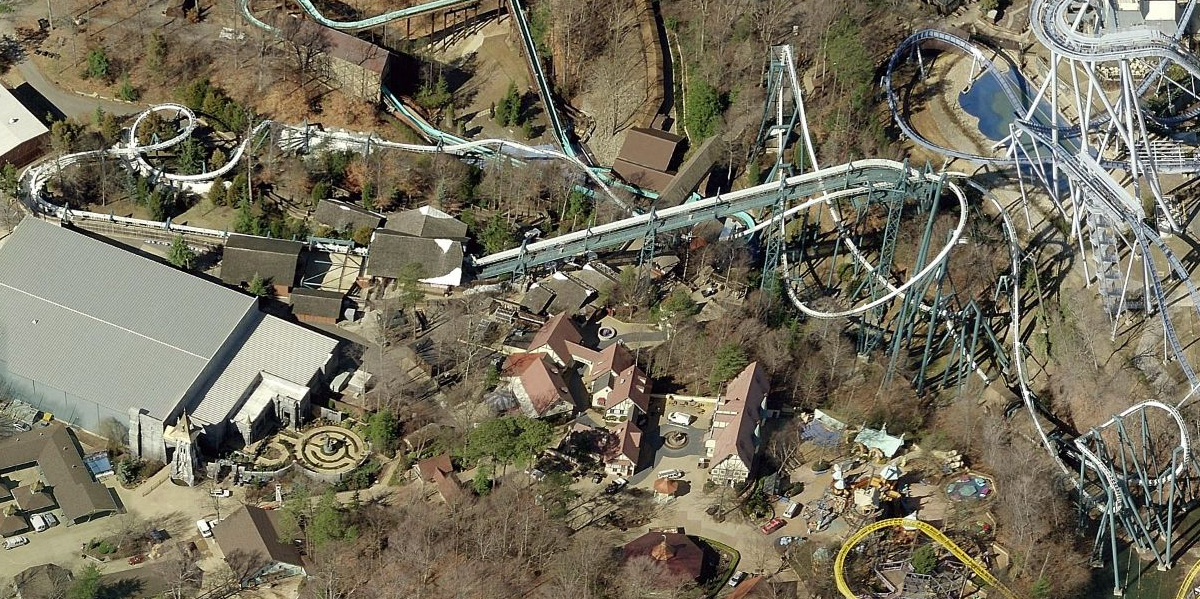
Another question on the minds of enthusiasts is the use of a "zero car" on the Alpengeist inverted coaster at Busch Gardens Europe. Eric acknowledged that due to the rides large size, a change in wheel size and composite material prompted a design modification on the coach so that the new wheels could run without any compromise. Once the ride was tested extensively, the firm realized that new wheels would work efficient enough that the "zero car" could be used to accommodate ride seating similar to prior inverted coasters.
Next, we asked Eric about the firm's policy in regarding heights of over 300 feet. He confirmed that B&M's position is one of producing the very best ride it can construct. That is the main goal of each and every one of their rides. The focus is on being the best ride possible, not necessarily exceeding any certain height record.
When asked about the Dive Machine concept, Eric was very pleased to the see the design's resurgence in popularity which should allow for more installations in the future. He believed that most parks felt the ride was a "one trick pony" and not capable of a full ride experience. With the design of Sheikra, B&M hopes to prove that the ride concept is capable of much more than it has shown in the past.
When asked what makes a great B&M coaster, Eric stated that the speed and the "wind blowing your hair" feeling was a fundamental trait that he felt was in every B&M coaster. He said that when you board a roller coaster, you are relinquishing your sense of control. Eric stated that when you are on a coaster, you need to totally forget you are on the coaster and just enjoy the ride. In addition, Eric spoke of the sensation of speed as being essential in making a great coaster. Mr. Berra mentioned Nemesis and Black Mamba in particular that provide that sense of speed as the coasters "hug the ground" and dive in and out of the terrain.
Finally, we asked Mr. Berra how he felt about the roller coaster enthusiast community. He mentioned that he enjoyed their enthusiasm in their rides and that B&M was pleased that their coasters are received so well by enthusiasts all over the world. He also stated that while client happiness is the source of their business, rider happiness allows the client to be satisfied with their purchase. So, as more people enjoy B&M coasters, more parks will demand them.
With proven engineering and design, Bolliger and Mabillard have assured themselves a place in roller coaster history. Their ground-breaking and novel ride concepts such as the inverted, floorless, diving, and flying coasters have all been a testament to their distinguished career. We will continue to look forward to great things from a company that is just getting started. Hang on folks, we are in for a ride!
We would like to thank Eric and the staff at B&M for taking time out of their busy schedule to chat with us!




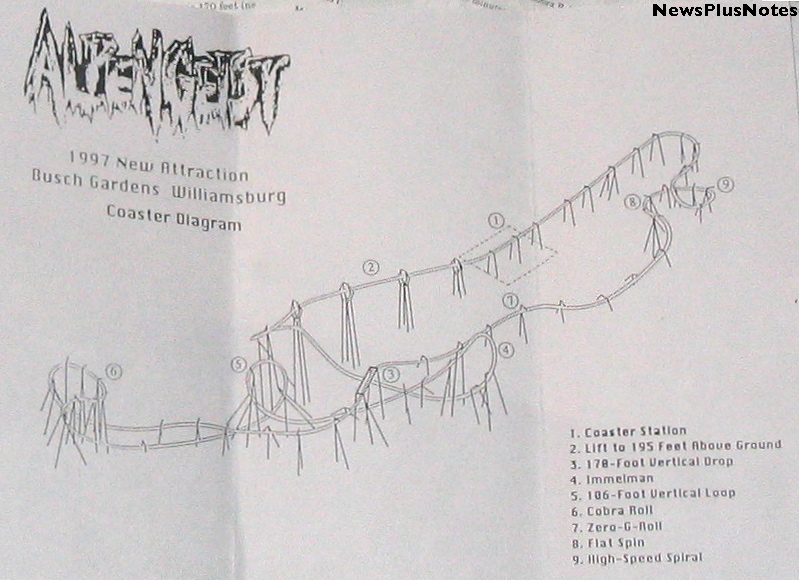

John said:Plus an old sketch/design of Alpie from 1996/97

We use essential cookies to make this site work, and optional cookies to enhance your experience.