
To @Nicole 's point, they didn't clarify what makes a "normal operating day". If that the average of Tuesdays? A Friday, Saturday, or Sunday? Did they take the holiday weekends out, add up total guests, divide by the number of open days, and come up with a percent based off that?
COVID-19 & Coasters: Coronavirus Impacts on the Amusement Industry
- Thread starter GrandpaD
- Start date
You are using an out of date browser. It may not display this or other websites correctly.
You should upgrade or use an alternative browser.
You should upgrade or use an alternative browser.
Register or Login to Hide This Ad for Free!


I ended up listening to the call, and @mtorange nailed most of it. But not to call out @mtorange but to add some context, that reference to operating "much lower than full capacity" was in relation to what summer weekdays are like. So they said when they look into it, they need to check compliance, and need to monitor what restrictions are going to be like to go to a reservation system, and rely on their revenue management function to make an appropriate response. When asked if the preference were to season pass holders, they said that they want to balance between passes and daily revenue.
This line of discussion starts at 27:10.
This line of discussion starts at 27:10.

I ended up listening to the call, and @mtorange nailed most of it. But not to call out @mtorange but to add some context, that reference to operating "much lower than full capacity" was in relation to what summer weekdays are like. So they said when they look into it, they need to check compliance, and need to monitor what restrictions are going to be like to go to a reservation system, and rely on their revenue management function to make an appropriate response. When asked if the preference were to season pass holders, they said that they want to balance between passes and daily revenue.
This line of discussion starts at 27:10.
Glad to hear I heard most of it right! ?Apologies for this one bit of confusion. When I wrote that post I wasn’t able to refer back to the call because CF was in the process of archiving it for future listening, which you were able to do to clarify my point. Thank you!

Everyone keeps assuming “__% capacity” = “__% of absolute max capacity.”
I understand the reason for that assumption, but I also don’t think it’s a great position to take. Max park capacity changes constantly. Staffing levels and which restaurants, rides, shows, attractions, etc. are operating on any given day directly impact max park capacity numbers. With massively reduced culinary, ride, and even restroom operations, max park capacity will be greatly reduced NATURALLY. Then, from that point, park capacity will be lowered down to whatever point the park believes they can handle on the paths with social distancing in place.
Ultimately these percentages are just rough, fudgable numbers made to make people feel good. I sincerely doubt any actual numbers are being calculated with only those percentages in mind.
I understand the reason for that assumption, but I also don’t think it’s a great position to take. Max park capacity changes constantly. Staffing levels and which restaurants, rides, shows, attractions, etc. are operating on any given day directly impact max park capacity numbers. With massively reduced culinary, ride, and even restroom operations, max park capacity will be greatly reduced NATURALLY. Then, from that point, park capacity will be lowered down to whatever point the park believes they can handle on the paths with social distancing in place.
Ultimately these percentages are just rough, fudgable numbers made to make people feel good. I sincerely doubt any actual numbers are being calculated with only those percentages in mind.
Glad to hear I heard most of it right! ?Apologies for this one bit of confusion. When I wrote that post I wasn’t able to refer back to the call because CF was in the process of archiving it for future listening, which you were able to do to clarify my point. Thank you!
It's funny I had the post up as I was listening, and like I said you nailed 99% of it on the head so great ear. I wanted to listen because it seemed a little odd to throw something like capacity out there without some sort of qualifier. Especially given this was an investor call, they are careful to put some type of qualifier on something like that (I've been in enough of these). Even given that, it wasn't shocking but at the same time it was shocking that they were being as dodgy answering the question of how much capacity they needed to have to feel comfortable opening. I know they don't want to flat out say it then hurt their stock when it doesn't happen, but they seemed to heavily lean on (and rightfully so) that each park is going to be different based on what regulations in its locality dictates.
Everyone keeps assuming “__% capacity” = “__% of absolute max capacity.”
I understand the reason for that assumption, but I also don’t think it’s a great position to take. Max park capacity changes constantly. Staffing levels and which restaurants, rides, shows, attractions, etc. are operating on any given day directly impact max park capacity numbers. With massively reduced culinary, ride, and even restroom operations, max park capacity will be greatly reduced NATURALLY. Then, from that point, park capacity will be lowered down to whatever point the park believes they can handle on the paths with social distancing in place.
Ultimately these percentages are just rough, fudgable numbers made to make people feel good. I sincerely doubt any actual numbers are being calculated with only those percentages in mind.
Sorry you entered this while I was typing and wanted to make a quick comment on it....on the call they didn't quantify what they consider capacity. It could be that they were talking about what you are there in terms of what the staffing could handle on a given day (ie they are trying to point out on most summer weekdays they are over staffed). It could be what the property is rated for in terms of how many people are out there. So that still leaves something up in the air some based on the call.

Most of these parks want to open to make money, and in turn they want as many people through the gate each day as they can to make the most profit. I (just my opinion) would think that a park such as BGW would go by the maxium number of guests that the building code laws allows in their park. From there they can if they were ever asked by a government agency say our peek has a max occupancy of 50,000 (again just guessing for all you provide proof people) people and today we only allowed in 25,000 in to comply with the law. The park could then always close before that if they needed to for staffing issues but to say a park will go by a sliding scale every day I think would be odd.Everyone keeps assuming “__% capacity” = “__% of absolute max capacity.”
I understand the reason for that assumption, but I also don’t think it’s a great position to take. Max park capacity changes constantly. Staffing levels and which restaurants, rides, shows, attractions, etc. are operating on any given day directly impact max park capacity numbers. With massively reduced culinary, ride, and even restroom operations, max park capacity will be greatly reduced NATURALLY. Then, from that point, park capacity will be lowered down to whatever point the park believes they can handle on the paths with social distancing in place.
Ultimately these percentages are just rough, fudgable numbers made to make people feel good. I sincerely doubt any actual numbers are being calculated with only those percentages in mind.
I have no idea if this is true but I have always heard they run out of parking well before they reach park capacity at BGW.
Interesting article discussing how Disney might handle pass holders with potential limited capacity...

NOTE- I don't have a SEAS annual pass. The article states "If you read the fine print when you buy any Disney annual pass, you'll see that it notes that admission is subject to park capacity. So, legally, Disney's in the clear telling annual passholders who don't make the capacity cut in an advance reservation that they can't use their pass that day."
Does the SEAS pass have such a disclaimer?
Disney's Problem with Annual Passes
When Disney announced yesterday the reopening of the Shanghai Disneyland Resort, executives made clear that they are planning a "go slow" approach for all of their park reopenings around the world, whenever they might be. Reopenings at resorts such as Disneyland, Disneyland Paris, and Walt...
www.themeparkinsider.com
NOTE- I don't have a SEAS annual pass. The article states "If you read the fine print when you buy any Disney annual pass, you'll see that it notes that admission is subject to park capacity. So, legally, Disney's in the clear telling annual passholders who don't make the capacity cut in an advance reservation that they can't use their pass that day."
Does the SEAS pass have such a disclaimer?
Interesting to hear that authors thoughts, but just like us here he too is making guesses.

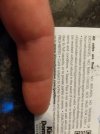 used my finger to cover up the serial, not pointing at anything - the card says it may not be allowed if the park hits capacity but I didn't read the webpage it provides for further explanation.
On the grand scheme of things, I for one am excited that there seems to be a light at the end of the tunnel when the mood has been doom and gloom for parks for awhile.

I don’t usually look to the Washington Post for theme park news, but I thought this article was interesting.
A few snippets:
A recent Reuters/Ipsos survey found that only 4 in 10 people would attend amusement parks before a vaccine for covid-19, the disease caused by the coronavirus, was found. That means, as much as they want to ride the Incredicoaster, 60 percent of Americans aren’t comfortable with what it will entail to do so.
“Disney’s been increasing pricing virtually every year for the past decade, proving … demand during a healthy economy,” said investment banker Lloyd Greif. “Well, this economy is sick and is going to remain sick for a while. Disney’s luxury pricing model for its theme parks is in for a redo.”
Bettors are bearish, too. The sportsbook site Bet Online found 1:1 — even odds — among bettors on whether Disneyland would open by Jan. 1, 2021, which would mean the park would be closed for 9½ months. A baby could be conceived, gestated and born and Disneyland would still be closed.
A few snippets:
A recent Reuters/Ipsos survey found that only 4 in 10 people would attend amusement parks before a vaccine for covid-19, the disease caused by the coronavirus, was found. That means, as much as they want to ride the Incredicoaster, 60 percent of Americans aren’t comfortable with what it will entail to do so.
“Disney’s been increasing pricing virtually every year for the past decade, proving … demand during a healthy economy,” said investment banker Lloyd Greif. “Well, this economy is sick and is going to remain sick for a while. Disney’s luxury pricing model for its theme parks is in for a redo.”
Bettors are bearish, too. The sportsbook site Bet Online found 1:1 — even odds — among bettors on whether Disneyland would open by Jan. 1, 2021, which would mean the park would be closed for 9½ months. A baby could be conceived, gestated and born and Disneyland would still be closed.
All I am seeing right now is everyone fighting over capacities and legal terms.
Quite frankly, no one knows exact numbers except for the parks themselves. They do not and to my knowledge never have and likely never will release exact attendance for parks. Attendance is considered a trade secret. The only numbers you ever see are either estimates or a nice rounded off number for marketing purposes. The closest estimates you are going to get on attendance will come from the annual TEA/AECOM Global Attractions Attendance report.
Capacity is different from attendance. While yes restaurants, theaters, and individual buildings have governmental imposed capacity limits parks themselves don't have such set numbers. This is for the reasons @Zachary gave. Parks give their best guess for capacity in the moment based on various factors. I know for a fact (from personal experience) that BGW doesn't count individual people as capacity. They measure their capacity by parking lots. If the parking lots are full and there is absolutely no space to park any vehicles, then they consider that closing the park due to capacity. WCUSA is even worse because they will park cars taking up any space in the grass, gravel, even in the middle of the road to prevent turning guests away.
All you can do right now is to gather data from TEA/AECOM's report and based on that create an estimate for what an average daily attendance might be. For example, according to their 2018 report, Magic Kingdom had approximately 20,859,000 guests for the year. When divided into 365 days, that gives an average of 57,148 guests per day (Side Note: I did round to the nearest whole number). So I would feel confident in saying when taking into the current situations requirements, if they were going to cut capacity, I would imagine their goal would be to restrict attendance to a daily 14, 287 guests per day to start with. For comparison, BGT had an estimated attendance of 4,139,000. By dividing that into 365 days, they had an average of 11,626 guests. Meaning, if they were to restrict their capacity to only a quarter of that, you are looking at only 2,907 guests per day.
Basically, Magic Kingdom would permit a slightly higher than average attendance than BGT.
Disclaimer: The figures I have provided were provided from TEA/AECOM's 2018 attendance report which is only a estimate and not exact. It is used in the industry as a guiding point, but not as an accurate science. And to add on to that, my calculations are just estimates based on averages and I'm not truly sure what we can expect to see park capacities reduced to.
The other issue is pass usage and reservations. Quite honestly, this drives me crazy that people think this is new or surprising terms when it comes to not guaranteeing admission for passes. This is the basics. Just because you purchased an annual pass does not mean you can use it every day without fear of being turned away due to a multitude of reasons. The biggest reason being park capacity. If they were to give every pass holder guaranteed admission regardless of capacity, that would truly be a nightmare.
While I am not trying to convince anyone that this is definitively how it will work; I believe there is no ratio between passes and single day admission. They most likely will have a system that will take X amount of reservations per day. I can see this being a similar setup compared to how FastPasses at WDW are reserved. Availability opens up and people purchase their ticket/reservation, and as spots are taken the options begin o disappear. Spots may open up last minute if people choose to cancel their reservation.
I don't understand why there has to be restrictions? It is a very simple and straight forward process, as I would imagine it being. People should just be cognizant of the current situation and realize, there will be less people permitted and should therefore make better plans or arrangements. They can do that by simply taking the time to ensure they are able to get everyone reserved far enough ahead of time.
Quite frankly, no one knows exact numbers except for the parks themselves. They do not and to my knowledge never have and likely never will release exact attendance for parks. Attendance is considered a trade secret. The only numbers you ever see are either estimates or a nice rounded off number for marketing purposes. The closest estimates you are going to get on attendance will come from the annual TEA/AECOM Global Attractions Attendance report.
Capacity is different from attendance. While yes restaurants, theaters, and individual buildings have governmental imposed capacity limits parks themselves don't have such set numbers. This is for the reasons @Zachary gave. Parks give their best guess for capacity in the moment based on various factors. I know for a fact (from personal experience) that BGW doesn't count individual people as capacity. They measure their capacity by parking lots. If the parking lots are full and there is absolutely no space to park any vehicles, then they consider that closing the park due to capacity. WCUSA is even worse because they will park cars taking up any space in the grass, gravel, even in the middle of the road to prevent turning guests away.
All you can do right now is to gather data from TEA/AECOM's report and based on that create an estimate for what an average daily attendance might be. For example, according to their 2018 report, Magic Kingdom had approximately 20,859,000 guests for the year. When divided into 365 days, that gives an average of 57,148 guests per day (Side Note: I did round to the nearest whole number). So I would feel confident in saying when taking into the current situations requirements, if they were going to cut capacity, I would imagine their goal would be to restrict attendance to a daily 14, 287 guests per day to start with. For comparison, BGT had an estimated attendance of 4,139,000. By dividing that into 365 days, they had an average of 11,626 guests. Meaning, if they were to restrict their capacity to only a quarter of that, you are looking at only 2,907 guests per day.
Basically, Magic Kingdom would permit a slightly higher than average attendance than BGT.
Disclaimer: The figures I have provided were provided from TEA/AECOM's 2018 attendance report which is only a estimate and not exact. It is used in the industry as a guiding point, but not as an accurate science. And to add on to that, my calculations are just estimates based on averages and I'm not truly sure what we can expect to see park capacities reduced to.
The other issue is pass usage and reservations. Quite honestly, this drives me crazy that people think this is new or surprising terms when it comes to not guaranteeing admission for passes. This is the basics. Just because you purchased an annual pass does not mean you can use it every day without fear of being turned away due to a multitude of reasons. The biggest reason being park capacity. If they were to give every pass holder guaranteed admission regardless of capacity, that would truly be a nightmare.
While I am not trying to convince anyone that this is definitively how it will work; I believe there is no ratio between passes and single day admission. They most likely will have a system that will take X amount of reservations per day. I can see this being a similar setup compared to how FastPasses at WDW are reserved. Availability opens up and people purchase their ticket/reservation, and as spots are taken the options begin o disappear. Spots may open up last minute if people choose to cancel their reservation.
I don't understand why there has to be restrictions? It is a very simple and straight forward process, as I would imagine it being. People should just be cognizant of the current situation and realize, there will be less people permitted and should therefore make better plans or arrangements. They can do that by simply taking the time to ensure they are able to get everyone reserved far enough ahead of time.
Last edited:
For reference, I have included TEA/AECOM's 2018 Attendance Report
I don't understand why there has to be restrictions? It is a very simple and straight forward process, as I would imagine it being. People should just be cognizant of the current situation and realize, there will be less people permitted and should therefore make better plans or arrangements. They can do that by simply taking the time to ensure they are able to get everyone reserved far enough ahead of time.
Yes, people should. But I'd imagine that the parks can't operate under such a utopian thought process.
I've seen enough notalwaysright.com stories plus have some time under my belt in retail to know that even some of the more intelligent and/or nice people lose their shit and/or get totally confused over any change to the normal situation, no matter how well it's explained or logically thought out. And that's before you get into the entitlement issues.
Granted, this isn't a strict retail translation, but I'm thinking there's a general correlation.
But that being written, I'd also venture to guess that most parks won't show guests anything other than whether they can or can't reserve any given date.
Funny thing about that, since large outdoor concert venues work under a similar paradigm and yet still usually show how many reservations (tickets) they have left for a given show in the GA areas.
Share:
Consider Donating to Hide This Ad