Honestly, for me, the popularity of the food is actually part of the issue—but in the opposite way as everyone is thinking.
I have a very dim view of the consumer—particularly when it comes to theme parks. I don't think people in theme parks know what they want. I don't think people in theme parks understand what is happening to them mentally and emotionally while inside these parks. I don't think most guests have any understanding of why they feel drawn to these places. I believe that if a theme park was designed around the immediate, stated desires of the average consumer, it would be a disaster and that exact average consumer would hate the experience provided to them. Call me an elitist, but that's the ground I'm staking here.
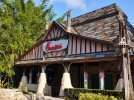
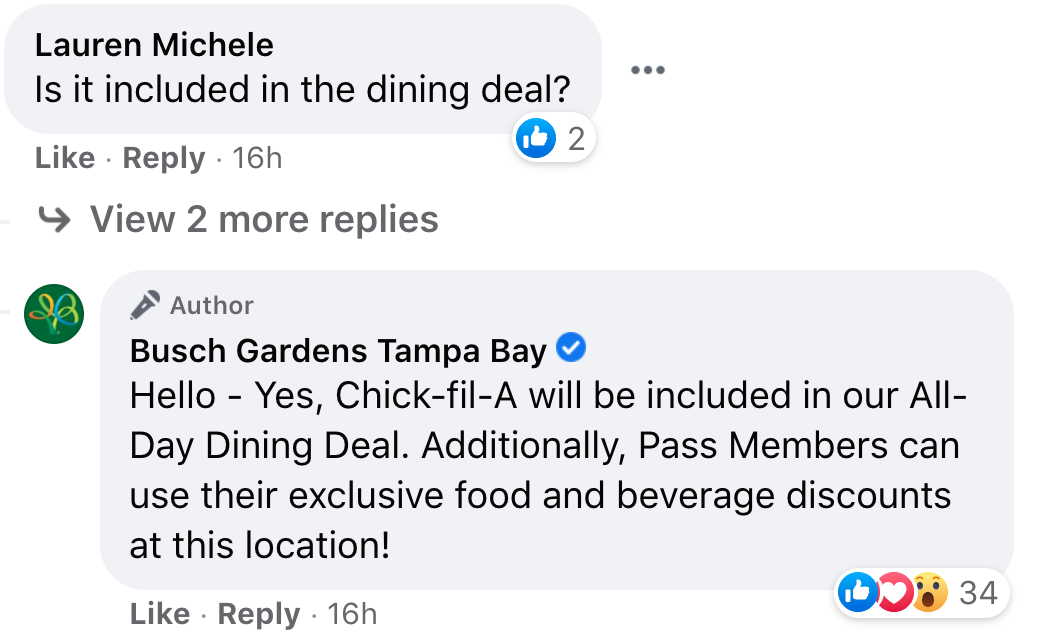
So with that in mind, I'm pretty sure that a Chick-fil-A inside BGT will be a blockbuster of a success. I could easily see it becoming the most popular dining location in the park—if not in shear sales volume, almost certainly at least in guest satisfaction. The polling is pretty clear—most people love Chick-fil-A. I believe that when most people are looking at a list of dining options featuring a bunch of in-park establishments they've never heard of alongside a Chick-fil-A, the majority would naturally gravitate towards the Chick-fil-A.
In my mind, that is a nightmare scenario. SEAS will (unfortunately, correctly, in my assessment) conclude that most people will lean towards food brands and businesses that they already know and love while inside the park. This will almost certainly lead to the expansion of outsourced dining establishments in SEAS parks. For every chain food item that is sold inside the park, that is one less sale the in-house culinary department makes. The less sales the in-house culinary team makes, the more the economies of scale principle breaks down—causing the cost to return ratio of running an in house culinary team at all to look like a worse and worse investment.
What happens then? Internal culinary budgets are cut. Themed dining offerings become more and more niche within the park—and almost certainly increase more and more in price. This is just a vicious cycle of course—driving more and more people to the chains that triggered this spiral to begin with.
So, what happens if that spiral occurs? What's so wrong about just letting people eat the food they say they want—the food they'll instinctually buy without a second thought? In my opinion, you only have to look to the previously mentioned McDonald's fries at Disney to see one of the most corrosive aspects in practice.
Back in the day, people visiting Disney saw McDonald's fries for sale, they knew they liked McDonald's fries, so they bought McDonald's fries. They were an incredibly successful product for Disney and to this day you can find tons of people who lament the loss of McDonald's fries in Disney parks. Many of these people, today, would tell you that they want to, once again, be able to buy McDonald's fries at Disney.
The problem? Food is a zero sum game. People eat a certain amount and then they're satisfied (or, in the case of a theme park, they buy a certain amount and then they hit the credit limit on their card). Anyway, either way, the point is that for every McDonald's fry Disney sold, it meant selling one less [insert incredible, in-house, interesting, themed snack here].
Now, here's the issue with that: people LOVE these [insert incredible, in-house, interesting, themed snack here]. In fact, I would assert that the positive impact on someone's day of trying and loving [insert incredible, in-house, interesting, themed snack here] is VASTLY greater than the positive impact of eating some fast food fries you already know you enjoy.
Furthermore, and perhaps far more importantly, McDonald's fries are not a Disney thing. When you eat McDonald's fries at Disney, you are thinking of McDonald's, not Disney. Worse yet, you're not going to reflect back on and yern for the experience of eating McDonald's fries because you can get McDonald's fries right now 10 minutes or less from your home. When Disney serves you a unique, interesting snack, that sticks with you, it lives in your memory. You think back to that food item and you think about Disney—you think about returning to Disney. You tell your friends and family about this neat snack and they think of Disney too—they associate Disney with interesting, unique food experiences.
Many of the people who have these incredibly positive food experiences every day now at, say, Magic Kingdom, simply would not if they were given the option to follow their gut and buy McDonald's fries that they know they'll like without a second thought.
These aspects of theme park dining are entirely invisible on a balance sheet—and I believe they are rarely even reflected in surveys. Again, when asked, many people will tell you they want McDonald's fries at Disney. When offered, many people will buy McDonald's fries at Disney. That said, when the common, familiar, everyday, comfortable option is not an option at all, that is when people discover new things. Experimentation—discovery—surprise—even disgust—these experiences trigger emotional responses—they trigger the creation of new memories. Being placed in an unfamiliar environment that's both safe but also a little challenging and unexpected at times—that's a core part of the magic behind a great themed experience. Most guests don't enter theme parks entirely cognizant of their desire to be taken out of their comfort zone—but great theme parks should do exactly that throughout the entire experience.
It takes a thoughtful, devoted, introspective theme park operator (like Disney) to recognize the importance of these experiences and to make changes to better facilitate them—even when it means going against expressed guest opinion and observed guest demand.
Rounding this back to SEAS, I don't believe SeaWorld parks are currently being run in such a way which would lend itself to moderating the natural business impulses resulting from reading the balance sheets I expect to result from this experiment. Without that introspective, institutional moderation—due in large part to Chick-fil-A's immense popularity—I honestly believe this move could lead to the SEAS in-house culinary apocalypse. I don't think it's remotely difficult to imagine a world in which 5 years from now in house culinary departments at SEAS parks are playing second fiddle to newly-added, wildly-successful chain dining.