

This is just the way Cedar Fair always did it no?

Yes, there was a comment that the smaller highly profitable parks that previously had a place in both chains, may no longer have a place in the chain and could be monetized to pay down debt.The mentions of reducing the portfolio means additional closures or sale of parks is coming. It will be interesting to see if United or Herschend or maybe even some other operator ends up acquiring a park or two. I don’t think any of the current parks are unprofitable, just that their focus needs to be on the most profitable.
IIRC, they said the core parks that are currently underperforming could become non core parks if they don't see the expected results from the investments in the parks. It that happens, they will cut investments in the park or monetize the park. Some parks have a poor reputation that might not be fixable. I will try to find direct quotes from the transcripts later, but that is my rough summary from memory.Honestly I wouldn’t be surprised to see Great Adventure up for sale— the Safari is really outside the scope of any other park in the chain, and while the theme park and water park can be profitable, they need investment. The park would fit the United Parks portfolio better, though I don’t know if they have the capital.


Yes, there was a comment that the smaller highly profitable parks that previously had a place in both chains, may no longer have a place in the chain and could be monetized to pay down debt.
IIRC, they said the core parks that are currently underperforming could become non core parks if they don't see the expected results from the investments in the parks. It that happens, they will cut investments in the park or monetize the park. Some parks have a poor reputation that might not be fixable. I will try to find direct quotes from the transcripts later, but that is my rough summary from memory.

So in my mind, maybe this was a result of cutting experiences from parks at the last minute and people just didn’t come. For example charging for experiences that had always been included.Attendance was down in October 2025 according to the press release (under "October Update"):
Based on preliminary operating results, attendance for the Combined Company over the five-week period ended Nov. 2, 2025, totaled 5.8 million guests, representing an 11% decrease in attendance compared to the same five-week period last year when October attendance was up approximately 20% due to exceptional weather.
Third quarter results somewhat isolate the severe second quarter weather, which impacted operations, negatively affected demand, and disrupted the pace of season pass sales and visitation over the entirety of the core season. Despite those challenges, the third quarter underscores the strength of our best performing parks. It also highlights those parks that require a fresh strategic approach. With that as the backdrop, please turn to slide four. During the 2025 season, we have learned an extraordinary amount about our individual parks. It has, in many ways, been a tale of two cohorts. Year-to-date, certain parks representing approximately 70% of property-level EBITDA have continued to outperform, while parks representing roughly 30% of property-level EBITDA have underperformed. As we’ve gathered more information and learned more about our underperforming parks, we’ve gained a clear understanding as to what it takes to turn around most of these properties.
[...]
As we look ahead, our roadmap for the underperforming parks centers on two primary pathways: migrating those parks toward the performance profile of our best parks within the portfolio, or classifying them as non-core and divesting them where it makes strategic and financial sense. We’re approaching this process with objectivity and discipline. We are reevaluating pricing strategies, operating cost structures, capital allocation plans, and long-term market potential. These evaluations are underway with the full support of our board. We are committed to making decisions that strengthen the long-term health of the company, even when those decisions are difficult. This isn’t new for us. Remember that we have already taken actions to monetize real estate in Northern California, Bowie, Maryland, and Richmond, Virginia.

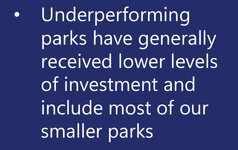
Thanks for posting the link to the transcript. I skimmed it and it had a few very interesting moments, specifically the part where they're apparently showing a slide with a "overperforming park" and an "underperforming park." Do you know if there's any way to view these slides?Good quote to illustrate @MaxxForceFan's point:
My biggest takeaway from this call is that it's no longer enough for a park to be currently slightly to somewhat cash positive. If a park is in the chain's underperforming group of parks and doesn't respond adequately to new investment, the chain intends to consider that property non-core and will look to options to monitize the property in other ways.
Written all over the subtext of this call for me was that Six Flags intends to close and/or offload more parks in the next few years. Basically zero way to read it otherwise in my opinion. Buckle up folks.
https://s204.q4cdn.com/155295784/files/doc_financials/2025/q3/FINAL-SIX-Earnings-Deck-11-07.pdfThanks for posting the link to the transcript. I skimmed it and it had a few very interesting moments, specifically the part where they're apparently showing a slide with a "overperforming park" and an "underperforming park." Do you know if there's any way to view these slides?


My fear is that there may not be a way forward for Dorney and SFGA to coexist in the future and honestly it could be a coin flip as to which one makes more sense to get rid of. I have long held the belief that the safari side of SFGA went on life support as soon as the merger happened and so far I have seen little to change my mind.So what are some of the small profitable parks besides Michigan's Adventure? What parks haven't been profitable lately?
I think we already have a pretty good idea of which are the low-hanging fruit when it comes to non-core versus strategic assets going forward. We're moving with a sense of urgency on that process as we're building out our 2026 plans. As we said in our prepared remarks, as parks, as we roll into 2026 and we see how parks perform, there may be a need to pivot in a park that we consider core right now.
We're trying to monitor [...] guest satisfaction, guests coming back. Part of this is making sure, as I've always said to the general managers and the folks that run our parks, the greatest measure of your success is not what you do this year, but it's whether your guest comes back next year and how you build a foundation of higher attendance in the future.
I think when we look at the portfolio of parks, and we talked about this all the way back to when we completed the merger, that as a combined company of this scale, the ability to sell off and monetize parks that were not going to contribute a great deal of growth. Maybe nice parks from a standpoint of what we would consider little mini cash cows, so to speak, parks that do not require a lot of capital, generate a nice amount of EBITDA and throw off cash flow. Those had a home, I think, in both standalone portfolios.
In a bigger company where we're trying to narrow our focus and shrink our capital needs as well as our risk or our liability exposures, getting the portfolio smaller and more nimble is a priority. We're going to look at the parks where our returns are the greatest, where the opportunities for growth are the highest, and we're going to focus on those parks. The other parks we'll look to monetize and use those proceeds to reduce debt.

Ah man, it’s too bad they fired all the general managers he said that to.We're trying to monitor [...] guest satisfaction, guests coming back. Part of this is making sure, as I've always said to the general managers and the folks that run our parks, the greatest measure of your success is not what you do this year, but it's whether your guest comes back next year and how you build a foundation of higher attendance in the future.

along with discovery kingdom since that park is also animal based (maybe spin great adventure & discovery kingdom off as great adventure inc?)The mentions of reducing the portfolio means additional closures or sale of parks is coming. It will be interesting to see if United or Herschend or maybe even some other operator ends up acquiring a park or two. I don’t think any of the current parks are unprofitable, just that their focus needs to be on the most profitable.
Honestly I wouldn’t be surprised to see Great Adventure up for sale— the Safari is really outside the scope of any other park in the chain, and while the theme park and water park can be profitable, they need investment. The park would fit the United Parks portfolio better, though I don’t know if they have the capital.
This quote that @Great Adventurer pulled says it all. I think it substantially changes an assumption we enthusiasts had about the merger. Even small parks that are “cash cows,” that are good and profitable, are not safe in the current Six Flags portfolio. Parks that were strong, steady assets in the legacy Cedar Fair and Six Flags portfolios no longer have a home in the combined company.I think when we look at the portfolio of parks, and we talked about this all the way back to when we completed the merger, that as a combined company of this scale, the ability to sell off and monetize parks that were not going to contribute a great deal of growth. Maybe nice parks from a standpoint of what we would consider little mini cash cows, so to speak, parks that do not require a lot of capital, generate a nice amount of EBITDA and throw off cash flow. Those had a home, I think, in both standalone portfolios.
In a bigger company where we're trying to narrow our focus and shrink our capital needs as well as our risk or our liability exposures, getting the portfolio smaller and more nimble is a priority. We're going to look at the parks where our returns are the greatest, where the opportunities for growth are the highest, and we're going to focus on those parks. The other parks we'll look to monetize and use those proceeds to reduce debt.

We use essential cookies to make this site work, and optional cookies to enhance your experience.

